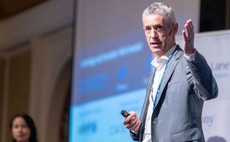
LP interview: Top Tier Capital Partners
Top Tier Capital Management sees continued interest from Asian LPs in the US venture capital market, but newcomers to the asset class must learn to understand its workings and be prepared for setbacks
When Fidelity Investments wrote down a number of its tech investments earlier this year - including big names like Dropbox, Moderna and 23andMe - some industry watchers feared a wider backlash against an industry characterized by heady valuations in recent years. But VC-focused fund of funds Top Tier Capital Management, which has several portfolio GPs supporting the same companies, checked its database and found that the reality did not match the interpretation of many observers.
"When we went and looked - I think it was more than half of them - when Fidelity wrote them down, they wrote them down to a value that was still higher than where the VCs were holding them on their books," recalls Jessica Archibald, managing partner at Top Tier. "It was almost like Fidelity was adjusting to the level of the other VCs. But the way it came out was, there's this big write-down."
The story shows the advantage that comes with access to multiple sources of information, and illustrates why Archibald and Top Tier's Asian LPs continue to be optimistic about opportunities in global venture capital. Actions like Fidelity's write-down may concern investors when taken in isolation, but they become less alarming when viewed through the lens of more experienced players. Overall, Top Tier feels that LP interest in venture capital is not just stable, but growing, and the firm expects to see a considerable increase in exposure over the years to come.
Levels of comfort
Fidelity is not the only large mutual fund to have marked down its technology investments in recent months. Morgan Stanley and T. Rowe Price made headlines in Asia after cutting their valuations for Flipkart, among other global tech start-ups.
However, some industry players - Top Tier among them - feel that to the extent that these investors' actions reflect pessimism about the venture market, that attitude is not necessarily warranted in other firms' situations. The arrival of investors that historically did not focus on venture investment, drawn by the large potential returns and fearful of being left out of the innovation boom, has helped energize the tech sector but also muddied the outlook somewhat for those that have spent years in the asset class.
"It used to be really clear: venture investors invest in venture capital, public market investors invest in public markets, and family offices invest in something else," says Archibald. "Now, I think, because those lines are blurred that complicates things too. It makes it harder to determine the true value of a company."
Worries about misleading or unreliable information led Top Tier to steer clear of VC investments in China; while the firm supported IDG Capital Partners and Accel's 2007-vintage growth fund, it has refrained from the country in recent years due to skepticism about what Archibald calls the "version 1.0" phase. The firm was inexperienced in the market, and unsure about the regulatory environment.
Now, however, many of Top Tier's earlier concerns have been mitigated, as other international investors have seen good returns and political changes have taken effect without disrupting the venture market. "You've seen the funds that are going to survive, they've spawned new funds. The VCs now have several funds under their belt," says Archibald. "So I would bet that we would increase our allocation in the next cycle."
Top Tier's confidence in the global venture market has also sparked increasing interest from Asian LPs, comprising pension funds, family offices, and corporate investors from Korea, China, Hong Kong and Japan, in its US funds. These newcomers have helped the firm reach $5.2 billion in assets under management. While in many cases the investors continue to be motivated chiefly by financial gain, the firm has seen a growing amount of variation in LPs' approaches.
In some cases, investors look for strategies that will support their primary businesses, in addition to delivering financial returns. One major pension fund, seeking ways to improve the level of healthcare provided to its retirees, and also hoping to lower its medical payouts, provided some of its pensioners with wearable fitness trackers; it then became interested in investing in the company that made them, reasoning that if they were going to buy the products, it would be good to have insights into upcoming developments.
While pursuing this kind of co-investment is not part of Top Tier's strategy, the firm does help LPs with such opportunities. In another case, a newspaper company that was an investor in Top Tier sought insights on investment openings in new content delivery channels; it wanted to be aware of the latest developments in the industry and also to have a potential partner to reach new consumers. The fund-of-funds sees these services as a component of the partnership that it maintains with its investors.
Blurring the lines
In some ways this phenomenon contributes to the blurring of the lines between investor types, since strategic investors, like mutual funds, have little experience of the venture market. "There's all these different reasons why people are investing these days. They probably existed before, but you don't know what's the rationale for investing at all, or for paying a certain price," says Archibald.
The increased flow of capital from these new investors has also inflated the size of the market; the National Venture Capital Association recorded $59 billion in VC investment last year, the most since 2000 and the second-highest yearly total on record. With so much capital at stake, any losses in the market could also be magnified, and make less experienced players nervous about prospects of venture investing.
Nevertheless, given the current low levels of commitment from Asian LPs in US venture capital, Top Tier expects to see rising interest from the region in the coming years. The key to their success will be keeping their heads in the face of unexpected developments.
"Don't get scared when you see some of the companies going out of business; they should, that's part of venture," says Archibald. "You hope they go out of business early and it's not a $10 billion company. But with the increased capital being invested in the venture market, it's going to cause increased losses, just naturally."
Latest News
Asian GPs slow implementation of ESG policies - survey
Asia-based private equity firms are assigning more dedicated resources to environment, social, and governance (ESG) programmes, but policy changes have slowed in the past 12 months, in part due to concerns raised internally and by LPs, according to a...

Singapore fintech start-up LXA gets $10m seed round
New Enterprise Associates (NEA) has led a USD 10m seed round for Singapore’s LXA, a financial technology start-up launched by a former Asia senior executive at The Blackstone Group.

India's InCred announces $60m round, claims unicorn status
Indian non-bank lender InCred Financial Services said it has received INR 5bn (USD 60m) at a valuation of at least USD 1bn from unnamed investors including “a global private equity fund.”
Insight leads $50m round for Australia's Roller
Insight Partners has led a USD 50m round for Australia’s Roller, a venue management software provider specializing in family fun parks.