
LPs back on course
While private equity funding sources continue to diversify, traditional limited partners remain the sine qua non of how the asset class survives and thrives.
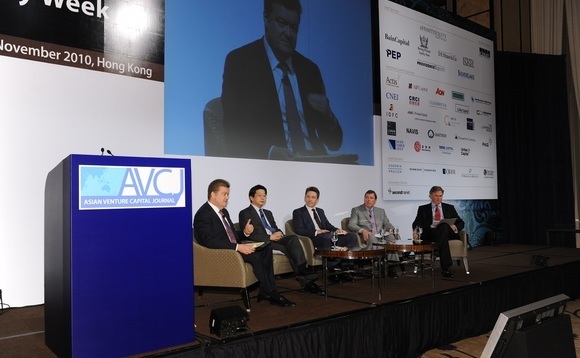
A year ago pension funds and endowments were understandably fraught, with their aggregate net worth slashed and reeling in the aftermath of the global economic contagion. What a difference a year has made. As John Breen, VP and head of funds and secondaries with global pension behemoth Canada Pension Plan Investment Board (CPPIB), put it at last week's AVCJ Forum in Hong Kong: "The industry is a lot stronger today than it was. We've managed to get through the financial crisis quite well. The best practices really have been a success."
T. Bondurant French, CEO of Adams Street Partners, concurred in full. "We've seen a re-liquification of the system to a great degree, particularly with the record high-yield debt issuance. It was a great worry a year ago. It's much less of a worry today."
Driving a new bargain
These points made, however, which can be classified as new assertiveness in the LP stance vis-a-vis GPs, codified in the book of best practices by the International Limited Partner Association (ILPA) last December, persists.
"LPs around the world are saying to their GPs that we really want you to get wealthy off carried interest (and not management fees)," Breen asserts. "Do what you said you would do; keep us informed, and have really good systems and procedures. [Because] LPs will be voting with their feet when a GP is not acting appropriately."
Adams Street's French agrees in principle, but also notes that, in the ongoing re-aligning of relationships, there is sometimes another side to the story.
"Some GPs have seen bad behavior among their LPs. So, just as the LPs have been scrutinizing who they want to go with for the longer term, the reverse is also true."
Perhaps occurring naturally with all this stress, the state of play is seemingly more polarized these days, much more black and white, making LP choices decidedly more manager-specific. "It could be any country, any strategy," French says. "But if you have a good strategy, it gets funded."
Dynamic industry changes afoot
Certainly, there are dynamic broader changes evident in the industry these days. One is the shift from the cottage industry to the families of funds that characterize it today.
"This really is creating a much bigger asset-gathering industry, and that has changed the alignments of interest with those who are investing just in private equity," Breen explains. "We want to ensure that GPs can continue to buy and operate companies."
That said, however, there are some extraordinary economic factors in play, such as the huge $650 billion private equity overhang. "This is going to affect the J-curve," Breen adds. "It's going to be deeper and it's going to move out to the right. But there's a reason why there are five-to-six year fund lives. And one of the big differentiators between good private equity investors and great private equity investors is not the deals they did, but the deals they said ‘no' to. As we move from this cottage industry based on founders to a more institutionalized industry, the ability to say ‘no' will increasingly be key."
Regulatory pressures
The size of the sums of money now involved has had other effects as well. "So much money has been raised that it's now attracting considerable media attention in a way it never did before," Bondurant French points out. And that has compromised the ‘private' MO which has distinguished private equity.
"These are, after all, private companies," he continues. "And with that, you're doing a lot of things with them that you wouldn't want their competitors to know about."
This has helped spur the notion that private equity is not transparent – a contention French vigorously disagrees with. Nevertheless it is a perception that has helped drive the thrust for much greater regulation, particularly in Europe. And while the worst of the industry's concerns in this regard seem to have been allayed at this writing, French says that "I worry that in future European investors may not have access to some of the best funds outside of Europe.
"One of the things I am most proud of in our industry is its transparency," he continues, "but where we've probably been falling short is not communicating this to those who are not in the fund."
Patrick Knechti, investment director with SL Capital Partners, agrees: "We very nearly had excessive regulation in Europe. And while some of that has been lobbied away, there's still a long way to go, and it remains a concern. As a fund-of-funds group, we're having to work very hard with the underlying GPs on this issue, because there's a whole community of stakeholders that we need to be educating, along with the investors."
Market moves
From a strictly market standpoint, while most now feel that the double-dip danger in the macro economy is now past, pressures to sell are still on the rise.
If a particular fund is, say, 35-40% invested, this can be relentless. And a big reason for that is the fact that LPs haven't seen a lot of liquidity since the summer of 2007. A concern within this, of course, is that this will lead to a fraying of discipline.
"Mostly what they choose to sell are the best assets, because they are the ones that attract financing and entail less execution risk," says SL Capital's Knechti. "We haven't seen too much trading between our funds and others. And LPs do understand transactions like that, on the basis of the need to fund a different stage of a company's development. Plus, people are paying full prices for good assets."
"We had thought that some of the 2006-07 vintages were going to be complete disasters," Adams Street's French adds. "But now the GPs think they're going to generate a 1.5x return on some of those funds."
Yet, looking forward, he cautions that, "Funds that invest quickly tend to do poorly. The bad thing about private equity is you can't undo what you've done, because there's no liquidity. So it's not sufficient just to be a good picker of individual transactions. You need to think through how you can do this over time and by sector."
But of course not so much that you get victimized by ‘paralysis by analysis.' As Grant Kelley, head of Asia with Apollo Global Real Estate Management, neatly puts it: "You don't get incentivized not to deploy capital."
The Asian dimension
Another aspect industry insiders agreed on is that secondaries are likely to play a much more prominent role, and that Asia's profile in this and other ways is now clearly reflective of the region's new economic muscle.
In terms of the big picture, French notes that "there's a tremendous amount of wealth in Asia, broadly defined; and it's increasing faster than in the US and Europe."
"The major Asian investors are looking to invest in scale," CPPIB's John Breen adds. "Some of them have a lot of capital that they are looking to deploy in this asset class. We've seen them, for example, trying to buy interests in the GP segment. And they have also started to play a considerable part in the secondaries area, where they've been aggressive, aiming to buy diversified portfolios across multiple funds."
Perhaps most telling is this raw metric: a little more than five years ago, Asian commitments amounted to less than 5% of total fund commitments. Today that share is roughly one third.
Latest News
Asian GPs slow implementation of ESG policies - survey
Asia-based private equity firms are assigning more dedicated resources to environment, social, and governance (ESG) programmes, but policy changes have slowed in the past 12 months, in part due to concerns raised internally and by LPs, according to a...

Singapore fintech start-up LXA gets $10m seed round
New Enterprise Associates (NEA) has led a USD 10m seed round for Singapore’s LXA, a financial technology start-up launched by a former Asia senior executive at The Blackstone Group.

India's InCred announces $60m round, claims unicorn status
Indian non-bank lender InCred Financial Services said it has received INR 5bn (USD 60m) at a valuation of at least USD 1bn from unnamed investors including “a global private equity fund.”

Insight leads $50m round for Australia's Roller
Insight Partners has led a USD 50m round for Australia’s Roller, a venue management software provider specializing in family fun parks.