

Fund focus: Hive Ventures' Taiwan AI thesis gets nod
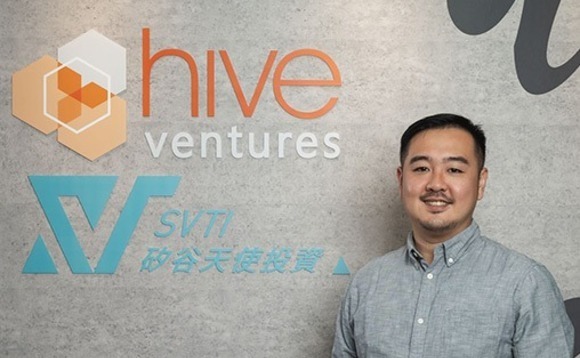
Taiwan’s Hive Ventures managed to attract significant local support for its debut fund despite having a sparse network in its home market. Its focus on early-stage AI didn’t hurt
Of the 21 Taiwanese technology companies that have gone public in the US, only one is not in hardware: entertainment industry software provider GigaMedia, which listed on NASDAQ in 2000. Hong Kong's iClick, which completed an IPO in 2017, leveraging a 2014 merger with Shanghai-based big data player Buzzinate, could be considered the second, with an asterisk.
Thats because Yan Lee, John Chen, and Will Wang, co-founders of Buzzinate, claim to be the youngest software entrepreneurs in Taiwan to achieve this milestone. This would be among their key credentials in launching a Taiwan-focused VC fund. The only problem is that their background is scarcely Taiwanese.
Lee (pictured) was born and raised in Singapore and educated in the city-state, the UK and mainland China. Chen is originally from the US, although he pursued an MBA in China, where he met Lee. Wang was born in Taiwan but spent most of his career in the US and mainland China.
By the time fundraising for their new project, Hive Ventures, got underway, COVID-19 grounded all international travel and with it any hope of raising money outside of Taiwan. Nevertheless, Hive's debut vehicle has pulled in several local heavyweights, including Mitac-Synnex, Unitech Electronics, and GMI Technology.
"When we came back to Taiwan, we didn't have these connections. Our businesses were built out of Taiwan. I had more contacts in Thailand than in Taiwan when we started here. But the landscape in Taiwan doesn't have that many early-stage VCs, and operator-led VCs are very few," Lee says.
"Asian founders like to run businesses forever. In Taiwan, most of the economy is built up by first-generation entrepreneurs who haven't let go yet. They might have family offices or corporate venture capital, but they don't set up their own VCs."
The fund closed at $13.5 million, beating a target of $10 million. Much of this can be attributed to the enthusiasm of Taiwan's National Development Fund (NDF), which chipped in a larger-than-usual amount. NDF had reason to be interested: Hive is focusing on the government's priority development areas of software and artificial intelligence (AI).
Hive's uniqueness as a seed-stage player thinking globally about Taiwanese talent also likely struck a chord with NDF, which had participated in several co-investments with the fledgling VC before making a fund commitment. Lee observes that it is the sole government-controlled entity in the region that makes early-stage investments directly from its main fund and that Taiwan was the only Asian economy to have a dedicated stimulus package specifically for tech start-ups.
Manufacturing will loom large in the strategy despite Lee's assertion that "hardware is always a race to the bottom." This is an area of low-hanging fruit for incubating AI companies with industry-specific applications in Taiwan and in some ways an easier path to going global.
The three biggest spenders on AI services globally are the finance, healthcare, and manufacturing sectors. The first two are heavily and differently regulated in every country, creating cross-border scaling roadblocks for AI suppliers. Manufacturing, by contrast, is seen as relatively free, especially in terms of navigating privacy and data protection issues.
The fund has made 10 investments to date and plans to back five to 10 more start-ups. Standouts to date include InfuseAI, a machine learning platform for enterprise applications. Lee says this is an area yet to hit its stride in Asia, but during Hive's four-month due diligence process for the company, six similar start-ups were invested in the US and Israel.
There will also be a significant focus on edge computing, a discipline of AI focused on device-level or otherwise on-premise data processing as a means of improving efficiencies. To some extent, Hive's preference for edge-enabled systems over pure cloud-based alternatives is rooted in the hardware realities of Taiwan's manufacturing economy. But that shouldn't imply a hesitancy to embrace the future.
"We've realized from working with companies like Foxconn and Wistron, the reason they're not going to a cloud is not because they are too traditional in their thinking. It's fundamentally because they create so much data every second in the real world, it's not practical to move it to a cloud. They have to be on-premise and make decisions locally, not in a cloud," Lee says.
"US companies that live in the cloud world believe all businesses will move to a cloud, but that does not work in Asia, which will probably skip the whole cloud paradigm and go straight to a hybrid cloud, or what some people call fog. That's what Taiwan has been building for the past 20 years, and why we understand it better than anyone in Asia."
More on Technology



Latest News

Asian GPs slow implementation of ESG policies - survey
Asia-based private equity firms are assigning more dedicated resources to environment, social, and governance (ESG) programmes, but policy changes have slowed in the past 12 months, in part due to concerns raised internally and by LPs, according to a...

Singapore fintech start-up LXA gets $10m seed round
New Enterprise Associates (NEA) has led a USD 10m seed round for Singapore’s LXA, a financial technology start-up launched by a former Asia senior executive at The Blackstone Group.

India's InCred announces $60m round, claims unicorn status
Indian non-bank lender InCred Financial Services said it has received INR 5bn (USD 60m) at a valuation of at least USD 1bn from unnamed investors including “a global private equity fund.”

Insight leads $50m round for Australia's Roller
Insight Partners has led a USD 50m round for Australia’s Roller, a venue management software provider specializing in family fun parks.