

Deal focus: RWDC's plastics replacement mission
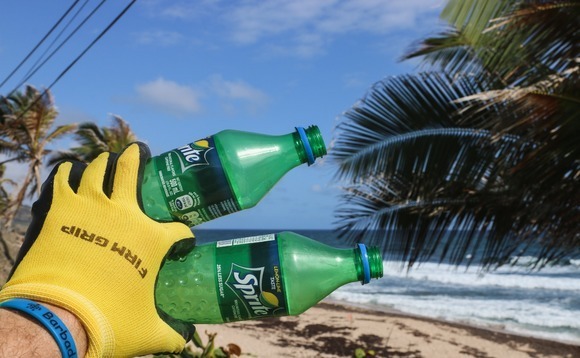
RWDC Industries believes it has a biodegradable substitute for plastic that can be produced at scale. The Singapore and US-based company now has $133 million in VC funding to help make its case
The chain of breakthroughs culminating in the emergence of a biodegradable alternative to single-use plastic – that meets the necessary criteria in terms of flexibility, heat resistance, versatility, and bearable cost – began in 2010 with the publication of a landmark academic paper. But the authors' fascination with their subject predates that event by at least a decade. It has taken more than 30 years for the science to become viable and for the scientists to find an engineer who could put their theories into practice. Still, the payoff could be immense.
"We divide risk into three buckets. First, technology risk – does the technology work? Second, intellectual property risk – is it patented and trade secreted? Third, market risk – will people buy the product? From our fourth fund onwards, we have only taken technology risk," says Finian Tan, chairman and founder of Vickers Venture Partners. "People ask me how you can invest in a company with no market risk. But if you are the only company producing a biodegradable material that feels like plastic and costs the same as plastic, there is no market risk. Demand is almost unlimited."
Vickers first encountered RWDC Industries in 2018, three years after the company was established. Within 12 months, it participated in a $13 million investment – the second tranche of a Series A round and RWDC's first institutional funding. WI Harper was the co-lead. Both investors re-upped in a third tranche of $22 million six months later, and last week they re-upped once again. Vickers was one of four leads in a $133 million Series B alongside Flint Hills Resources, CPV/CAP Pensionskasse, the pension fund of Swiss retailer Coop, and International SA, a fund controlled by the parent company of Ikea.
RWDC didn't want customers in its cap table – CPV/CAP and Interogo operate at arm's length from their affiliates – but that endorsement underlines the potential of the technology. The company is one of dozens pursuing various forms of polyhydroxyalkanoate (PHA), recognized as the only commercially viable biodegradable bioplastic, but it is the sole player running trials with a dozen global food and consumer goods companies.
Origin story
PHA is a well-known biopolymer. Procter & Gamble (P&G) initiated work in this area with a view to developing biodegradable sanitary towels. Isao Noda, an author of the paper, pioneered the multinational's research in this area. When P&G decided to sell the patent via a tender process in 2007, it was acquired by Danimer Scientific and Meridian Holdings Group. Both companies were founded by Daniel Carraway, another author and a longstanding authority on biopolymers. Noda joined Danimer in 2012 on his retirement from P&G. Blake Lindsey, the third author, was already there.
All PHAs degrade much like paper when exposed to the elements. The nearest comparative is polylactic acid (PLA), which is frequently used in biodegradable packaging. Scientists take naturally occurring lactic acid and polymerize it, creating a material that degrades in compost conditions, typically around 60 degrees Celsius. However, PHAs are broken down by microbes at normal temperatures, in soil, freshwater or saltwater. In addition, PHAs do not have a glass transition temperature between zero and 100 degrees – a PLA straw collapses when dipped into hot coffee, a PHA straw does not.
The original patent on PHA has expired, making the territory anybody's game. However, P&G differed from most others in the space through its pursuit of medium-chain-length rather than short-chain-length PHAs. The distinction is crucial, as the 2010 paper sets out. Medium-chain-length PHAs differ from their short-chain-length brethren in that they are less brittle and therefore more versatile in their end-use.
"Paper coatings is a key focus area for us, but we've also made bottles, bottle caps and other injection-molded articles. We are working with one of the world's largest personal care products brand owners on turning fibers into wet wipes. Wet tissue is 50% plastic. When you flush the tissue, it clogs city sewers and creates fatbergs. When it's biodegradable this won't happen," notes Zhaotan Xiao, RWDC's Asia president, a former commodities trader who was an early investor in the company before joining full-time. "The problem was never demand; everyone knows how versatile this material is. The problem was supply; no one has produced at scale."
Targeting scale
RWDC cracked this when Carraway met Singapore-based Roland Wee, an engineer with decades of experience. The company name incorporates their initials and it is headquartered in the US and Singapore. RWDC claims that breakthroughs achieved by the two founders have enabled it to reduce capital expenditure requirements to half that of its competitors and make significant operational expenditure savings as well.
First, this means the company can offer products at a price point acceptable to customers looking to replace traditional plastics. Xiao is coy on comparative costs, noting that crude oil prices have collapsed recently while plant-based oils – RWDC's feedstock – have not. He admits the cost is less than five times that of plastic but emphasizes the externalities: companies are under increasing pressure to consider the environmental and human health costs of plastic. Tan is more forthcoming: "Companies are willing to pay 1.7x. They can't pay 1x for plastic anymore."
Second, RWDC is aggressively pursuing scale. Small-scale tests have been carried out at a pilot facility at the University of Georgia. A plant with an annual capacity of 4,000 tons is currently under construction, but before the end of the year, the company plans to start work on its first full-scale production module with a capacity of 25,000 tons. The Series B plus an expected US government-backed loan should cover the construction of one module, perhaps two.
The ambition is to become the next BASF, Dupont, or Dow Chemical, targeting a range of natural compounds that solve problems without resorting to man-made molecules. Getting there won't be easy. While RWDC has conducted successful fermentation tests in large-scale tanks, it remains to be seen if the second part of the production process – purification – runs as smoothly. Moreover, the process innovations that underpin the technology are difficult to reverse, but not impossible. The likes of BASF, Dupont, and Dow Chemical will no doubt try.
Xiao acknowledges the competitive tension – Lindsey has joined Carraway at RWDC, Noda remains an advisor to Danimer, which is still active in the medium-chain-length PHA space – and welcomes it. According to the UN, more than 400 billion tons of plastic is produced globally every year, with single-use packaging accounting for more than one third. There is plenty of market demand to go around and the typical multinational customer would be concerned about single-supplier risk. That said, the incumbent plastics giants may struggle to adjust.
"The philosophy is different," Xiao observes. "We are more akin to a biotech company. Our process is like brewing beer or making penicillin rather than inorganic chemistry where you are hydro-cracking at 1,000 degrees Celsius and adding different types of chemicals to synthesize larger molecules. For them, to switch is like changing the course of the Titanic."
More on Southeast Asia


Latest News

Asian GPs slow implementation of ESG policies - survey
Asia-based private equity firms are assigning more dedicated resources to environment, social, and governance (ESG) programmes, but policy changes have slowed in the past 12 months, in part due to concerns raised internally and by LPs, according to a...

Singapore fintech start-up LXA gets $10m seed round
New Enterprise Associates (NEA) has led a USD 10m seed round for Singapore’s LXA, a financial technology start-up launched by a former Asia senior executive at The Blackstone Group.
India's InCred announces $60m round, claims unicorn status
Indian non-bank lender InCred Financial Services said it has received INR 5bn (USD 60m) at a valuation of at least USD 1bn from unnamed investors including “a global private equity fund.”
Insight leads $50m round for Australia's Roller
Insight Partners has led a USD 50m round for Australia’s Roller, a venue management software provider specializing in family fun parks.