

Taiwan must think globally, overcome China issues - AVCJ Forum
Taiwan needs to think globally as it looks for ways that domestic companies can leverage growth in other markets, but this means addressing mainland Chinese involvement in the economy.
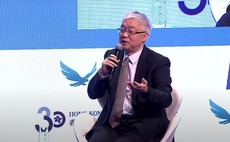
Speaking at the AVCJ Taiwan Forum, C.Y. Huang, president of FCC Partners, noted that global M&A is at 15-year high and there has been a lot of activity in Taiwan. This includes domestic companies pursuing consolidation strategies and going overseas, and foreign players investing in local businesses. Mainland China companies are among those showing interest, but it remains a sensitive issue.
"We need more M&A and we need to look at the China factor. Do we view Chinese counterparties as threats or partners?" Huang said. "China is becoming very active. In the past China has gone through Taiwan to go to the US, but now Tsinghua Unigroup invests directly into Western Digital."
The level of comfort with Chinese investment varies depending on the industry, but the fundamental impetus to go overseas is uniform. Mike Shang, an executive director with Morgan Stanley Private Equity Asia (MSPEA), said his firm increasingly focuses on Taiwan businesses with operations abroad.
"There are companies trying to form strategic alliance with Chinese companies as they try to address possibilities in China," Shang said, highlighting the semiconductor industry in particular. "Taiwan can really take advantage of that."
For China-focused Legend Capital, Taiwan has particular appeal in terms of consumer products, tourism and culture and entertainment. But Jackie Liu, a managing director with the firm, cautioned that investments cannot be predicated on domestic growth alone.
"If you invest in a Taiwan company the prospects for growth are limited. But if you can bring more countries together that would be a better deal," he said. "We need to think out of the box and we need to create more opportunities for Taiwan companies to become more international."
There is an obvious role for private equity to play in the process, providing capital and strategic support to companies that are considering acquisitions at home or abroad. However, Huang added that fears of "red capital" can still potentially be damaging to deals.
He cited the agreed sale of sell cable TV provider China Network Systems to MSPEA and Far EasTone Telecommunications as an example. Noting in parliament that sovereign wealth fund China Investment Corporation bought a stake in Morgan Stanley during the global financial crisis, a Taiwanese legislator questioned whether China therefore had influence over MSPEA.
Areas like this require clarification, Huang said, pointing out that there are mainland LPs - and therefore a certain amount of Chinese capital - in many international private equity funds.
More on Greater China



Latest News

Asian GPs slow implementation of ESG policies - survey
Asia-based private equity firms are assigning more dedicated resources to environment, social, and governance (ESG) programmes, but policy changes have slowed in the past 12 months, in part due to concerns raised internally and by LPs, according to a...

Singapore fintech start-up LXA gets $10m seed round
New Enterprise Associates (NEA) has led a USD 10m seed round for Singapore’s LXA, a financial technology start-up launched by a former Asia senior executive at The Blackstone Group.

India's InCred announces $60m round, claims unicorn status
Indian non-bank lender InCred Financial Services said it has received INR 5bn (USD 60m) at a valuation of at least USD 1bn from unnamed investors including “a global private equity fund.”

Insight leads $50m round for Australia's Roller
Insight Partners has led a USD 50m round for Australia’s Roller, a venue management software provider specializing in family fun parks.