

Korea culture plays: Brands apart
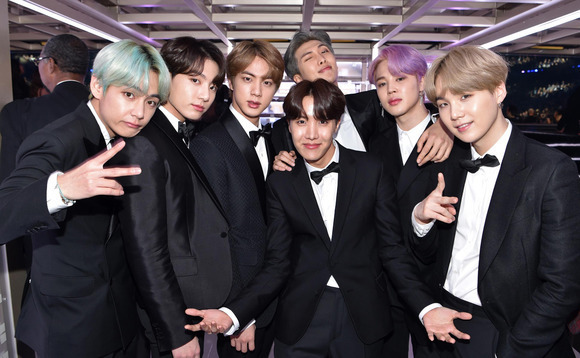
Korean pop music is being used as a marketing tool for a long tail of consumers products and services. While investors are keen to leverage star power, they recognize it doesn’t last forever
When Mediheal, a Korean producer of sheet masks used in beauty treatment, launched in the US earlier this month, it teamed up with arguably the country's most powerful marketing phenomenon: BTS. Already one of the best-selling Korean musical acts of all time, the boyband's latest album confirmed its status as a global superstar, topping the charts in the US, UK, Australia and New Zealand. The release came on the back of a sell-out world tour that drew an aggregate audience of more than one million.
"They are selling out venues in Los Angeles and London, this has given the Korean Wave another boost," says one local private equity investor.
K-pop and cosmetics are natural bedfellows. Indeed, BTS members have collaborated with Mediheal before, name-checking the brand in interviews as one of their favorites. Countless Korean singers and actors have done the same with other products, implicitly saying to fans, "Use this and you could look like me." How broadly can this star power can be leveraged across K-pop, K-fashion, K-beauty, K-food?
King content
Media and entertainment are direct beneficiaries - not least Big Hit Entertainment, the talent agency responsible for BTS, which has won backing from several PE investors. PE and VC investment in the space reached a record high of $603 million last year, although occasional large-cap deals have a distorting effect on headline numbers. In 2013, it was Affinity Equity Partners' acquisition of music streaming and artist management business Loen Entertainment; last year, it was an investment in online game developer Bluehole Studio by IMM Investment and JKL Partners.
Orchestra Private Equity was also active in 2018, purchasing post-production house Seoul Vision. The company, which specializes in TV and online commercials, has offices in Seoul and Shanghai. The China team's first customers were Korean ad agencies, but now 95% of its business comes from local agencies as well as international players that have Chinese clients. Despite this shift, there is consistent demand for content with a Korean flavor.
"Chinese TV viewers love Korean dramas and so the ads are often reflective of what they see in these dramas," says Jay Kim, Orchestra's founder. "If you look at Japan, China and the US, there are specific editing techniques and colors for each one. Our customers want very Korean-style commercials – they ask us to make it look very Korean for a Chinese audience."
The K-content theme runs deep. One of IMM Private Equity's portfolio companies, a mobile-based comic provider called Lezhin, has seen demand for its English-language service expand by more than 100% a year in recent years on the back of rising interest from overseas customers. Aaron Shin, who left Formation Group last year to form Ascendo Ventures, has an investment in Dalcomsoft, which develops mobile games based on K-pop artists. The company has one million daily active users scattered all over the world. Ascendo is helping Dalcomsoft build out its portfolio to include Western artists.
Another of the venture capital firm's investments targets the nexus of K-pop and K-fashion. Wedding Book is an online wedding planning platform that provides information on dresses, venues, photography, and décor. It recently entered Vietnam in partnership with a local real estate developer. "We are marketing it as a Korean fashion brand," says Shin. "Sentiment towards Korean in Southeast Asia is very strong on the consumer side."
Fashion is seen as the missing piece in the Korean cultural chain, from a private equity investment perspective. However, L Catterton Asia made something of breakthrough in 2017 when it led a $53 million commitment to Gentle Monster, a Korean sunglasses and eyewear brand. The company gained popularity domestically and in China after actress Jun Ji-hyun wore its sunglasses in the TV drama "My Love from the Star." It already has flagship stores in mainland China and Hong Kong.
Staying relevant
For all the interest in using cosmetics as a template for other consumer segments, it is worth noting that not all brands have found success. Wonpyo Choi, a partner at Bain & Company, breaks the beauty wave into two segments, before relations between Beijing and Seoul temporarily deteriorated in 2016 over US plans to deploy an advanced missile defense system in Korea, and after.
"The K-beauty boom was quite lucky. Many brands didn't really know what was making them successful in China and they didn't do anything about the Chinese market in terms of marketing or product development," he says. "Following the missile issue, some of them collapsed because they had failed to build up their brands and manage their channels well."
The second wave has been characterized by more systematic behavior. Products have been launched that are a good fit for Chinese customers and social media influencers have been courted to spread the word. Several PE investors with interests in the space concur that K-pop credibility alone is not enough to gain traction in China. Just as Chinese ad campaigns seek to capture a Korean look and feel, so some Chinese beauty brands have positioned themselves as Korean. The Koreans must respond by being smarter about product development and understanding what local customers really want.
Moreover, this alchemy must be sustained across multiple product lines, so the fortunes of the company don't track those of the individual brand lifecycle. "I don't think BTS will last forever, and it's the same for other brands," says Shin of Ascendo. "But new pipeline will come. K-beauty isn't just popular because of marketing. There are a lot of top-tier manufacturers here and Korean brands can work with them in proximity. You should look at the entire value chain, not individual brands or vendors."
Nevertheless, this sense of transience is not for everyone. Younggi Han, an executive director with VIG Partners, expresses an interest in post-production and visual effects, where the companies are service providers that build up a regular client base. But he is wary of investments that involve business models based on "turning out hits," especially at the prevailing entry valuations. "Some companies are asking for crazy multiples or multiples that are too high for us," he says.
These sentiments are echoed by another local buyout player, who also points to the inherent risk of over reliance on certain geographies. "K-pop and K-fashion are trendy businesses. This makes them extremely people dependent. You are taking a lot of management risk and a lot of HR risk," he says. "On top of that, you are talking about exporting a culture to a third market, quite possibly China, which is a Communist country. That's very difficult execution when you are effectively pricing to perfection."
More on North Asia



Latest News

Asian GPs slow implementation of ESG policies - survey
Asia-based private equity firms are assigning more dedicated resources to environment, social, and governance (ESG) programmes, but policy changes have slowed in the past 12 months, in part due to concerns raised internally and by LPs, according to a...

Singapore fintech start-up LXA gets $10m seed round
New Enterprise Associates (NEA) has led a USD 10m seed round for Singapore’s LXA, a financial technology start-up launched by a former Asia senior executive at The Blackstone Group.
India's InCred announces $60m round, claims unicorn status
Indian non-bank lender InCred Financial Services said it has received INR 5bn (USD 60m) at a valuation of at least USD 1bn from unnamed investors including “a global private equity fund.”
Insight leads $50m round for Australia's Roller
Insight Partners has led a USD 50m round for Australia’s Roller, a venue management software provider specializing in family fun parks.