

Fund focus: Equis' infrastructure overhaul
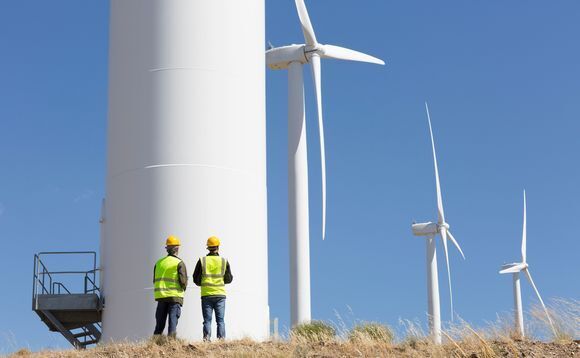
Swapping a traditional fund for a less familiar corporate vehicle represented a gamble for Equis, but the Asian infrastructure manager was confident its approach would make sense to a subset of investors
Over the course of six years, the team at Equis Funds Group accumulated a portfolio of 180 renewable energy assets in Asia Pacific with a combined capacity of 11,135 megawatts and more than 300 staff. The infrastructure manager raised more than $2.3 billion across two funds and various follow-on vehicles – plus an unspecified amount of co-investment – to finance this buildout.
The exit came in one fell swoop. In 2018, Global Infrastructure Partners (GIP) bought the entire Equis Energy business for $5 billion, including assumed liabilities of $1.3 billion. It was the largest-ever renewables acquisition globally at that time and underpins what Equis Funds Group claims is a 97% cash realization rate across all its deals to date.
For its next endeavor, the Equis team is no longer subject to investment horizons dictated by fund life. Abu Dhabi Investment Authority (ADIA) and Ontario Teachers' Pension Plan (OTPP) have committed $1.2 billion to a corporate structure instead of a fund. The goal remains creating a portfolio of renewable energy assets – with a focus on developed markets within Asia, notably Australia, Japan, and Korea – but theoretically these could be held in perpetuity.
Fundamental shift
"We can afford to be opportunistic. We can develop strategies and platform businesses within the structure, and we may decide to exit those through a trade sale or we may continue to hold assets and harvest the yield," says David Russell, a co-founder and managing director of Equis Funds Group and Equis Development. "We will structure investments in a manner that allows us that flexibility and we will tailor exits to meet the needs of our shareholders. We are not locked into a fixed period."
There is a similar flexibility when it comes to putting in more capital. Equis Development plans to put over $2 billion to work during the next two years, implying that ADIA and OTPP will add to their commitments. The investors have preemptive rights in their agreements, essentially giving them right of first refusal on any new share issuance – a standard corporate action.
The decision to abandon a fund structure wasn't taken lightly. The Equis team looked at both options and even opened discussions with potential investors over a $2 billion fund before opting for the corporate vehicle.
"Once we got comfortable that we had a small number of investors sophisticated and experienced enough to appreciate the finer points of a very bespoke corporate structure, that's when we really pivoted away from the fund structure and focused on those investors," Russell says. "COVID-19 hit, and we could no longer sit down face-to-face and map out those issues, so we were delayed, but credit to ADIA and OTPP for being confident enough to do it via video calls."
The finer points of using a corporate structure include compensating management. Moving away from a management fee plus carried interest wasn't a wrench because that journey started several years ago. As a developer of greenfield renewable energy assets, Equis employs sizeable teams in different geographies to build and operate projects. Russell estimates there were nearly 600 on the books when Equis Energy was sold, of whom two-thirds were directly involved in renewables.
"A typical fund management fee isn't going to work in that scenario because it won't be enough to support operations," he says. "We were already transitioning more formally into a developer of infrastructure assets. In doing so, we were already focused on investment performance rather than management fees, so we could adopt a structure that reflected that."
Under that structure, an operating budget is developed for each office and asset. Meanwhile, the team is making a material cash investment into Equis Development, some of which has already been put to work in projects currently underway. In addition to a return on that investment, the team will receive additional compensation based on the performance of the assets once the investors have reclaimed their principal plus a preferred return.
"The corporate structure is a lot cleaner from an administrative perspective and from an investment perspective," Russell adds. "There is greater alignment of interest. They are no longer paying a management fee, so there is no external manager contractually aligned to them. Instead, they are investing in that manager, they are part of the assets, and part of the longevity of the assets."
To his knowledge, this approach is without precedent. The closest large institutional investors have come to it within infrastructure is establishing platforms in partnership with dedicated teams that focus on certain strategies. Backing a manager that only raises capital through one structure, where the structure can last in perpetuity and the management and key persons are employed by it and tied to it, represents another step along the spectrum – albeit short of taking everything in-house.
Mature markets
Dry powder in hand, the Equis team now plans on building another portfolio to rival the ones that came before. Headcount is already over 70. They will continue to concentrate on building projects from the ground up rather than buying existing brownfield assets; even without the unusual corporate structure, the more complicated risk-reward dynamics in this space rule out many investors. And they will continue to target more mature markets within Asia.
When Equis raised its two funds, this was not the expectation and the mandate was purely emerging markets. The team, therefore, front-led project development in Australia and Japan - which went on to become a significant part of Equis Energy - using a separate structures and pools of capital. They invited the fund investors to buy in at cost when further capital was required, while retained stakes in those portfolios of assets separately to the funds.
"We've learned that the returns, or the compression of margins, associated with moving assets from development to construction to operation are a lot higher in developed markets than in emerging markets," Russell explains. "People think that emerging markets are riskier at the macro level, so the returns should be higher, but it's not the case. The returns we think we can get in Australia, Korea and Japan are much higher than in markets like India or China."
More on Fundraising




Latest News

Asian GPs slow implementation of ESG policies - survey
Asia-based private equity firms are assigning more dedicated resources to environment, social, and governance (ESG) programmes, but policy changes have slowed in the past 12 months, in part due to concerns raised internally and by LPs, according to a...

Singapore fintech start-up LXA gets $10m seed round
New Enterprise Associates (NEA) has led a USD 10m seed round for Singapore’s LXA, a financial technology start-up launched by a former Asia senior executive at The Blackstone Group.

India's InCred announces $60m round, claims unicorn status
Indian non-bank lender InCred Financial Services said it has received INR 5bn (USD 60m) at a valuation of at least USD 1bn from unnamed investors including “a global private equity fund.”

Insight leads $50m round for Australia's Roller
Insight Partners has led a USD 50m round for Australia’s Roller, a venue management software provider specializing in family fun parks.