
• Home
  • News
  • Analysis
  •  
    Regions
    • South Asia
    • North America
    • Europe
    • Central Asia
    • Australasia
    • MENA
    • Southeast Asia
    • Greater China
    • North Asia
  •  
    Funds
    • LPs
    • Buyout
    • Growth
    • Venture
    • Renminbi
    • Secondary
    • Credit/Special Situations
    • Infrastructure
    • Real Estate
  •  
    Investments
    • Buyout
    • Growth
    • Credit
    • Early stage
    • PIPE
  •  
    Exits
    • Buyback
    • IPO
    • Open market
    • Trade sale
  •  
    Sectors
    • Real Estate
    • Consumer
    • Financials
    • Healthcare
    • Industrials
    • Infrastructure
    • Media
    • Technology
  • Events
  • Chinese edition
  • Data & Research
  • Weekly Digest
  • Newsletters
  • Sign in
  • Events
  • Sign in
    • You are currently accessing unquote.com via your Enterprise account.

      If you already have an account please use the link below to sign in.

      If you have any problems with your access or would like to request an individual access account please contact our customer service team.

      Phone: +44 (0)870 240 8859

      Email: customerservices@incisivemedia.com

      • Sign in
     
      • Saved articles
      • Newsletters
      • Account details
      • Contact support
      • Sign out
     
  • Follow us
    • RSS
    • Twitter
    • LinkedIn
    • Newsletters
  • Free Trial
  • Subscribe
  • Weekly Digest
  • Chinese edition
  • Data & Research
    • Latest Data & Research
      2023-china-216x305
      Regional Reports

      The reports review the year's local private equity and venture capital activity and are filled with up-to-date data and intelligence on fundraising, investments, exits and M&A. The regional reports also feature information on key companies.

      Read more
      2016-pevc-cover
      Industry Review

      Asian Private Equity and Venture Capital Review provides an independent overview of the private equity, venture capital and M&A activities in the Asia region. It delivers insights on investments made, capital raised, sector specific figures and more.

      Read more
      AVCJ Database

      AVCJ Database is the ultimate link between Asian dealmakers and those who provide advisory, financial, legal and technological services to the private equity, venture capital and M&A industries. It is packed with facts and figures on more than 153,000 companies and almost 117,000 transactions.

      Read more
AVCJ
AVCJ
  • Home
  • News
  • Analysis
  • Regions
  • Funds
  • Investments
  • Exits
  • Sectors
  • You are currently accessing unquote.com via your Enterprise account.

    If you already have an account please use the link below to sign in.

    If you have any problems with your access or would like to request an individual access account please contact our customer service team.

    Phone: +44 (0)870 240 8859

    Email: customerservices@incisivemedia.com

    • Sign in
 
    • Saved articles
    • Newsletters
    • Account details
    • Contact support
    • Sign out
 
AVCJ
  • South Asia

AVCJ Awards 2019: AVCJ Special Achievement: Renuka Ramnath
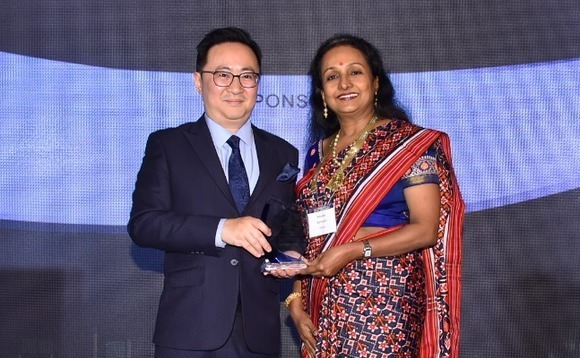
AVCJ Awards 2019: AVCJ Special Achievement: Renuka Ramnath
  • Tim Burroughs
  • 16 April 2020
  • Tweet  
  • Facebook  
  • LinkedIn  
  • Google plus  
  • Save this article  
  • Send to  

Renuka Ramnath has played a significant role in the development of private equity in India, initially with ICICI Venture and now with Multiples Alternative Asset Management

Renuka Ramnath first backed PVR in 2003 when the cinema chain needed growth capital to support the roll-out of multiplexes in India. It had 19 screens and wanted to reach 100 within three years. ICICI Venture, of which Ramnath was CEO, invested approximately $10 million for a 35% stake. The GP re-upped in 2005 and then exited in 2007 – following PVR’s IPO – with a more than 4x return.

Five years later, Ramnath reengaged with PVR as Multiples Alternative Asset Management, the PE firm she established on leaving ICICI Venture in 2009, paid around $27 million for a 15.8% interest. PVR had changed, but so had the competitive dynamics of the industry. Multiples helped bankroll the acquisition of Cinemax India, creating the largest multiplex player in the country at that time, with 351 screens across 85 locations.

While the first phase of PVR’s development was characterized by proliferation, the second is about consolidation. The company pioneered multiplexes, then saw a host of rivals pile in: from Inox Group, an industrial gas business pursuing diversification, to Anil Ambani’s Reliance Group to real estate developers that decided they no longer needed third-party cinema operators.

Numerous of these have retrenched over the last seven years, leaving PVR – now with more than 800 screens, over INR31 billion ($434 million) in revenue, and a string of acquisitions under its belt – as one of four giants. In several respects, cinemas are a microcosm of corporate India’s evolution, underlining how openings for private equity in the country have become more complex. Ramnath is as relevant now as she was in 2003, but the industry has shifted beneath her.

“In the early 2000s, almost 100% of the investment thesis would have been growth. You were picking good entrepreneurs in sectors with good macro and providing expansion capital,” she says. “Today, much of the investment goes into problem-solving – fixing bad capital structures, M&A, de-conglomeration. The application of private equity has become broader and more versatile. Opportunities are also much bigger than just growth stories, which by and large only happen in financial services.”

Structured solutions

Adaptability has been a feature of a career that began on the management training scheme at power generation equipment manufacturer Crompton Greaves and is scheduled to reach another milestone before the end of 2020 with a final close on Multiples’ third fund. In between, Ramnath spent more than two decades at ICICI Group during which a taste for technology and entrepreneurship drew her away from the predictable merchant banking path.

It started with a move from ICICI Securities – a joint venture between the Indian bank and J.P. Morgan – back to the parent group to work on structured finance. K.V. Kamath, who had returned to ICICI as CEO in 1996, was the instigator. Keen to broaden the bank’s business scope, he appointed Shikha Sharma to lead the new initiative and she in turn asked for Ramnath to join the team.

Structured finance represented a step into the unknown. ICICI wanted to avoid the quagmire of complex corporate balance sheets by taking on cash flows that could be understood and ringfenced. It drew up recipes for collateralized loan and bond obligations, securitizations, and other off-balance sheet solutions that were alien to the Indian market. Making these products work required coordination with regulators, lawyers and bank counterparties, as well as the target companies.

“It was my first experience of building a business,” Ramnath recalls. “We were conceptualizing a new financial product and convincing team members to join us. Selling it internally was a big job as well. We were telling senior people how to do a business they had been doing for several decades and that they had to take loans from us in a different structure.”

During this period, Ramnath threw herself into new projects with the gusto of a young professional eager to establish herself, but it was also a coping mechanism. A single mother of two after a car accident claimed the life of her husband in 1995, she admits to having “needed something radically different” in the hope that it would shake free a modicum of grief. This led her to a 12-week stint on an advanced management program at Harvard Business School (HBS) in 1999.

“I told myself I wouldn’t come back to the same thing – I didn’t know what I was going to do, but that is what I said to myself on the plane,” she says. “I wouldn’t stay in touch with my colleagues at ICICI and bother myself with what was happening internally, who was getting promoted, who was getting double increments. I would leave everything behind to come back as a new person.”

Ramnath’s time at HBS coincided with the swelling of the dotcom bubble. She consumed case studies of successful entrepreneurs – becoming completely won over by against-the-odds triumphs of the will – and married that with exposure to technology. In the melting pot environment of a business school, it was clear the internet would have a profound impact on current and future business models. The question was whether she could make this happen in India.

Returning to ICICI, Ramnath asked her superiors for a technology-enabled project that would break new ground for the company and was tasked with building an intranet. The HBS case study on Cisco proved useful. This was followed by an upgrade to ICICI’s online banking portal and a pitch to build a digital payments platform. For the latter, she received $2 million in internal funding and decided to tap the international VC community for the rest.

Triumph of will

Having built businesses in India and networks in Silicon Valley, moving into early-stage investment was a logical next step. Ramnath set about creating an e-commerce network, committing capital through the INR1 billion EcoNet Fund, which was supported by Compaq. The dotcom bubble had burst, so raising external money was a challenge, but she persevered. It was enough to impress Kamath, who appointed Ramnath as CEO of ICICI Venture in 2001.

“They were converting from a financial institution into a commercial bank and the regulator said all the technology incubation and investments had to be removed from the balance sheet,” she explains. “They moved all my investments to ICICI Venture and gave me a specific mandate not only to protect their money but also to raise third-party capital. All they could give me was my freedom and ask me not to damage the brand. There was no additional capital or human resources.”

Fundraising was far from straightforward. Hopes that institutional investors in the US and Europe would cut checks based on the strength of the ICICI brand, a pitchbook and Ramnath’s passion were quickly dismantled, sometimes cruelly. One meeting with a placement agent in New York saw a senior executive silence Ramnath with a wave of his hand as he flicked through the pitchbook, then throw the document back at her and proclaim the fundraise a lost cause.

The September 11 terrorist attacks happened not long after and it became clear that US investors had little appetite for illiquid strategies in India. Swiss Re committed $25 million to Series I of ICICI Venture’s India Advantage Fund, which closed at INR11 billion in 2003. Temasek Holdings contributed $20 million towards the end of the process as part of a strategic tie-up with ICICI Group.

For the rest, ICICI Venture focused on local LPs. This wasn’t easy either because there was little understanding of PE. The firm pioneered educational initiatives, but the breakthrough commitment from Life Insurance Corporation of India was won through sheer persistence. “They said ‘You have been coming here for three years, maybe you’ve come 50 times. We can’t say we understand this product any more than we did three years back, but you look more confident. So please remember we are giving the money to you, not ICICI, you had better stay there and deliver,’” Ramnath recalls.

When she departed to form Multiples, eight large publicly owned Indian institutional investors that were longstanding LPs of ICICI Venture provided a chunk of the $405 million raised for Fund I. Local support is also likely to be a feature of Fund III, with the government-backed National Investment & Infrastructure Fund agreeing to commit $100 million. However, Ramnath remains disappointed – though not necessarily surprised – by the relative lack of local LP participation in the asset class.

Some of these investors were previously active in the market but had their fingers burnt as a result of backing a wide array of managers and generating unimpressive median returns. Rather than double down on the subset of groups that had outperformed, they withdrew. Others never even got started and regulatory moves to increase the risk weighting for private equity are a deterrent.

“I would like to say that India gets $25 billion of private equity money today: $5 billion from local investors and $20 billion from overseas, because generally we are a capital-poor country. But we don’t even raise $500 million from local institutions, only family offices are providing capital,” Ramnath explains. “There is zero appetite for this product among government-owned banks and insurance companies, even after 20 years of successful track records from many managers in India.”

Those track records began to accumulate in the mid-2000s. Series I of the India Advantage Fund ended up delivering an IRR in excess of 70%, underpinned by the likes of Tata Infomedia, ACC Refractories, Centurion Bank of Punjab, Va Tech Wabag, and Nagarjuna Constructions. The money multiples on these deals ranged from 5x to 20x.

As a result, foreign capital poured into India, with an annual average of $8 billion raised for country-focused funds between 2006 and 2008, up from $1.3 billion for the preceding three years. Over the same two periods, investment – by international and domestic managers – increased more than sevenfold to $12.5 billion. Ramnath describes the environment as an explosive combination of expectations that India’s rapid economic growth would go on forever, escalating valuations, and an underlying weakness in terms of governance and risk management.

“People were sitting on an engine running at 1,000 miles per hour, they didn’t know how to manage the growth, and then the global financial crisis happened,” she says. “We had an economy with a much lower growth rate, while the capital structures, companies and strategies were set up for something faster. Infrastructure was also a problem. Investments ran into huge problems over government concessions that didn’t see the light of day or didn’t generate any cash flow.”

India PE 2.0

In recent years, the market has staged a resurgence, with investment hitting a record $37.5 billion in 2019 on the back of four consecutive annual increases in the amount of capital deployed. Fund sizes of $1 billion are now being mooted – for the next vintage, if not the current one – which would represent a return to pre-crisis levels: the second series of the India Advantage Fund closed at $1 billion in 2006, though $200 million was later returned to investors.

Much has changed in terms of the acceptance of private equity in India as well as the underlying industry infrastructure. Entrepreneurs are more willing to engage with external investors, financial talent is flocking to PE and VC firms, and there are plenty of service providers willing to help source and facilitate transactions. There has also been some consolidation within the GP community as capital gravitates towards better performing managers.

Moreover, as the PVR example illustrates, the evolving needs of target companies have broadened the scope for private equity involvement. A total of $15.9 billion went into control transactions between 2017 and 2019, compared to $5.7 billion for the three years before that. Even so, Ramnath is wary of championing the buyout opportunity too aggressively. Four of the top investments from ICICI Venture’s first fund were control deals, but these are regarded as outliers; minority growth is set to remain the dominant theme for Multiples’ third vehicle, which has a target of $800 million.

“Buyouts are still not a big opportunity in India,” she says. “We have very large deals – with check sizes of $300-500 million – that are done by some of the global players. We don’t see many mid-size buyout opportunities. That will happen over the next 10-15 years. Things will be very different in terms of the texture of the product: the entire cap table will change from family ownership to institutional ownership.”

Pictured: Renuka Ramnath of Multiples Alternative Asset Management receives the special achievement award from AVCJ's Allen Lee

  • Tweet  
  • Facebook  
  • LinkedIn  
  • Google plus  
  • Save this article  
  • Send to  
  • Topics
  • South Asia
  • GPs
  • India
  • Multiples Alternative Asset Management
  • ICICI Venture Funds Management Company
  • AVCJ Awards

More on South Asia

India's InCred announces $60m round, claims unicorn status
  • South Asia
  • 10 November 2023
Beauty brand Mamaearth raises $204m in India IPO
  • South Asia
  • 09 November 2023
Norwest backs India hospital, HealthQuad marks 3x exit
  • South Asia
  • 08 November 2023
OTPP invests $80m in India's Xpressbees
  • South Asia
  • 08 November 2023

Latest News

Asian GPs slow implementation of ESG policies - survey

Asia-based private equity firms are assigning more dedicated resources to environment, social, and governance (ESG) programmes, but policy changes have slowed in the past 12 months, in part due to concerns raised internally and by LPs, according to a...

  • GPs
  • 10 November 2023
Singapore fintech start-up LXA gets $10m seed round

New Enterprise Associates (NEA) has led a USD 10m seed round for Singapore’s LXA, a financial technology start-up launched by a former Asia senior executive at The Blackstone Group.

  • Southeast Asia
  • 10 November 2023
India's InCred announces $60m round, claims unicorn status

Indian non-bank lender InCred Financial Services said it has received INR 5bn (USD 60m) at a valuation of at least USD 1bn from unnamed investors including “a global private equity fund.”

  • South Asia
  • 10 November 2023
Insight leads $50m round for Australia's Roller

Insight Partners has led a USD 50m round for Australia’s Roller, a venue management software provider specializing in family fun parks.

  • Australasia
  • 10 November 2023
Back to Top
  • About AVCJ
  • Advertise
  • Contacts
  • About ION Analytics
  • Terms of use
  • Privacy policy
  • Group disclaimer
  • RSS
  • Twitter
  • LinkedIn
  • Newsletters

© Merger Market

© Mergermarket Limited, 10 Queen Street Place, London EC4R 1BE - Company registration number 03879547

Digital publisher of the year 2010 & 2013

Digital publisher of the year 2010 & 2013