

AVCJ Awards 2019: Firm of the Year - Large Cap: PAG
China’s private consumption story continues to be a driving force for PAG Asia Capital. The GP also won prizes for Deal of the Year - Large Cap and Fundraising of the Year - Large Cap
Mixed-ownership reform has emerged as a key tenet of the Chinese government's drive to modernize and fully commercialize state-owned enterprises (SOEs). The initiative – whereby private capital and best practices are introduced with a view to improving efficiency, but the government does not cede control – has been through multiple rounds involving more than 60 companies.
The State-owned Assets Supervision & Administration Commission (SASAC) said in December that 47 mixed-ownership reform projects had taken place, at central and local level, over the course of 2019. The agency is expected to unveil a three-year action plan in early 2020 outlining further reorganization efforts. PE participation in mixed-ownership reform has largely been limited to a handful of high-profile deals: Sinopec, COFCO, and China Unicom, among others.
In the past 12 months, PAG Asia Capital has bought two SOEs, Baosteel Gases and Hisun BioRay Biopharmaceutical – the standout transactions from a period in which the GP deployed $2.3 billion, secured one IPO exit and closed its third fund at $6.1 billion. Even though they represent his first major SOE-related deals in 10 years, PAG chairman Weijian Shan is reluctant to annex them as an emerging theme. And while both Baosteel Gases and BioRay have received the mixed-ownership imprimatur, neither fits the previously established model.
"I don't see anything new in mixed-ownership reform. Starting from the early 2000s, when Zhu Rongji was premier, many SOEs were restructured and foreign capital was brought in. Most of the major state-controlled banks went through that process and listed," he says. "We are different in that we buy control. We are not a passive investor: we can add value by improving operations. That is how in private equity, especially for buyout firms, you make money."
Gases again
A common characteristic of the Baosteel Gases and BioRay transactions is that the sellers were motivated by clear economic rationale. China Baowu Steel Group has a separate, captive industrial gas business supplying its plants. Baosteel Gases was run independently, served third-party customers, and therefore deemed non-core. Shanghai-listed Zhejiang Hisun Pharmaceutical, meanwhile, found that local investors were not attributing full value to the efforts of its capital-hungry drug R&D platform. The parent figured that offloading BioRay would boost its share price.
PAG has previous experience in the industrial gases space, which helped it get comfortable underwriting a deal. That said, Baosteel Gases could not have been more different from Yingde Gases in 2017. The latter was the product of dispute between the major shareholders in a listed company, with PAG establishing itself as a trusted counterparty by both sides before accelerating due diligence to extinguish the threat of a looming strategic buyer. By contrast – and perhaps contrary to perception – dealing with a SOE was relatively straightforward.
"They played by the rules and they were very cooperative during the due diligence process. Unlike Yingde, there were no internal issues," says Shan. "But you must understand industrial gases to be interested in it, and not many people understand it. We were able to take advantage of the opportunity when Baosteel was trying to sell the asset. There were only two bidders as far as we know, us and a strategic."
The structure for the $780 million transaction was complex - 51% acquired through a public tender and a further 14% obtained by scooping up shares in subsidiaries that were swapped into Baosteel Gases shares – but well packaged because it facilitated an exit for Warburg Pincus, an investor in one of the subsidiaries. Similarly, while negotiations with Baowu were protracted and an antitrust review was required, Shan asserts that a strong brand within China – he has been active in the market for more than 20 years with Newbridge Capital, TPG Capital, and PAG – makes a huge difference.
The major challenge came in the form of the competing investor. Having agreed minimum increments for the bidding process, the unnamed strategic player tried to blow PAG out of the water, upping its offer by RMB50 million ($7.2 million) per round. PAG responded each time with the lowest possible increase of RMB10 million. The goal was to stretch out the process, aware that the strategic would need board approval to exceed a certain valuation and the board members were unlikely to be kept from their beds.
"My wishful calculation was if we stretched it out to midnight US time they would not be able to continue. To what extent that became effective, I have no idea. But they did stop bidding around midnight," Shan says. "We had worked out where our ceiling was, and we wouldn't go over it. Fortunately, they stopped right at that level."
Growth to buyout
The $580 million BioRay transaction was also a competitive process, but once again rival bidders were scarce in the latter stages. This is partly because PAG turned the deal on its head. Hisun Pharmaceutical initially wanted to sell a minority stake to support the development of its portfolio of biosimilar drugs for auto-immune disorders: one went into commercial-scale production in 2018 and has surpassed RMB200 million in sales, another is scheduled for launch in early 2020.
A growth capital opportunity became the largest private equity investment in the industry to date after PAG convinced the parent that ceding 58% and implementing market-oriented governance would be in its best long-term interests. The GP's growth team sourced the deal – they knew Hisun Pharmaceutical's management from a previous transaction that did not materialize – and then brought in their buyout colleagues when it became apparent the check size would be much larger.
"After preliminary diligence, our team quickly came to the conclusion that the asset was very good, but the governance structure where Hisun's parent company, a listed SOE, remained a controlling shareholder would be problematic. A control transaction would allow us to unlock additional value at BioRay and would also fulfill the interests of the listed parent in the longer term," says Kevin Xu, a managing director with PAG Growth Capital, which is currently deploying a $350 million fund.
The growth team has made numerous biotech investments, with Rongchang Pharmaceutical, a specialist in immuno-oncology and auto-immune drugs, and Alphamab Oncology, which is developing treatments for cancer, joining the portfolio last year. BioRay stood out as one of few large-scale and fully integrated players in the market, with capabilities running from drug discovery through clinical R&D and manufacturing to sales.
"A typical biotech company often only focuses on R&D but lacks manufacturing and commercializing capabilities. BioRay represents, to date, the only fully integrated biopharmaceutical platform in China controlled by a sponsor. In addition, it has one of the most robust drug portfolios, especially in autoimmune and oncology treatment areas, consisting of already on-market biopharmaceuticals, late-stage clinical assets, as well as novel molecules in development," Xu adds.
This was the first collaboration between PAG's buyout and growth funds, but it is unlikely to become a regular occurrence. While the former typically writes equity checks of $100 million and above with control or co-control a given, the latter caps out at $50 million and takes minority stakes. They are similar in sector focus – anything that caters to private consumption, from healthcare to financial services – and there is crossover in terms of personnel. Two partners from the buyout team sit on the growth fund's investment committee.
The growth strategy exists because PAG was seeing investment opportunities involving smaller companies, often earlier-stage technology businesses with a lot of upside but also more risk, that simply didn't fit the remit of a buyout fund. China Music Corporation (CMC), owner of the largest library of music broadcasting rights in the country when the GP invested in 2013, is a case in point.
PAG nearly passed on the deal because the check size was below its minimum level. However, the firm decided the opportunity couldn't be ignored and structured a transaction comprising an initial commitment of $60 million and the right to invest a further $40 million if required. In 2016, Tencent Holdings bought a majority stake in CMC at a valuation of $2.7 billion and merged the business with its own music assets to form Tencent Music Entertainment (TME).
PAG swapped its shares in CMC for a stake in TME and the company – now primarily a music streaming service that makes money from subscriptions, virtual gifting sales, and sub-licensing content – went public in New York in late 2018 with a market capitalization of $22 billion. The private equity firm made a partial exit, realizing proceeds of $57 million and retained an equity interest worth approximately $2 billion at time of listing.
Building out
Since Shan arrived at PAG in 2010 and established a private equity vertical alongside existing hedge fund and real estate strategies, headcount has surpassed 60. This includes investment professionals in the buyout and growth teams as well as an operations team. The operations function has been there from the outset, though the nature of its involvement varies based on the maturity of the target company.
"For markets like China and India, we tend to work with companies with a shorter track record and management teams with less tenure and professional operating experience. In these cases, we focus our efforts on the professional development and support of the executive teams," explains David He, a partner in the operations team. "For growing companies, managing an increasingly bigger and more complex organization is also a major challenge, so our operations teams are often very hands-on, both with budgeting as well as informally coaching our executives."
The situations this team addresses have arguably become larger, more complex and often more international as PAG's funds have increased in size with each vintage. The firm raised $2.5 billion for its first private equity buyout vehicle in 2012, a second of $3.6 billion followed in 2015, and Fund III closed at $6.1 billion in late 2018.
Progressively larger fund sizes have become an enduring theme among Asia's top buyout fund managers. The explanation given by some is that they calculate the amount of capital required in the coming vintage by studying likely market trends and the pace of deployment in the previous cycle. PAG doesn't look at it this way.
"We could have raised a bigger fund," Shan says. "I wanted to raise a smaller fund, but you want to be in the first tier to compete with peers more effectively. It seemed to me that $6 billion was the minimum required to stay in the first tier, so that was where we capped the fund. I don't think the market is big enough to allow you to deploy more than $6 billion within four or five years. And if you fail to do that, the drag on IRR will become significant."
PAG has broadened its footprint within Asia over the past few years – there are more deals in Australia and Southeast Asia, for example, and an India PE head was appointed last April – but the firm continues to have a larger percentage exposure to China than its peers. Approximately two-thirds of Fund II was deployed in China-related deals. This is not by design, rather a function of where the firm sees attractive opportunities within its target sectors.
Asked to identify key trends across the portfolio from an operations perspective, Lincoln Pan, another partner in the team, highlights the recruitment and retention of top management as companies scale, a focus on bolt-on acquisitions and capital expenditure to boost market share and cash flow, and a need for strong risk management given the current stage of the growth cycle and overall tightening of credit. Risks arising from China-US trade tensions are not on the list.
Shan sees no reason to add them, PAG's substantial China holdings notwithstanding. He maintains that US consumers are being hit harder by the tariffs than their Chinese counterparts, pointing to a New York Federal Reserve study which found that despite a 10% depreciation in the renminbi and tariff hikes on $250 billion worth of goods, US import prices for Chinese-made products have fallen 2% since the trade war started, the same as for all other countries. American consumers are bearing the extra cost.
Internal analysis of PAG's investments established there has been little or no impact. Consumer-related companies in China remain in expansion mode – riding on the longer-term shift from investment to consumption-driven growth – as evidenced by robust revenues for Youran Dairy, kindergarten operator Golden Apple Education Group, online matchmaking platform Zhenai, and TME since the middle of 2018. Moreover, these businesses are largely debt-free.
"We have long followed the strategy of not investing in manufacturing and exports where there is overcapacity and margins are thin but investing in businesses that cater to domestic consumption. Our businesses are, by and large, still generating double-digit growth, both topline and bottom line," Shan says. "In more mature markets, you need a lot of leverage to generate 20-30% IRR because the growth isn't there. In China, you can get 20-30%, sometimes without any leverage at all."
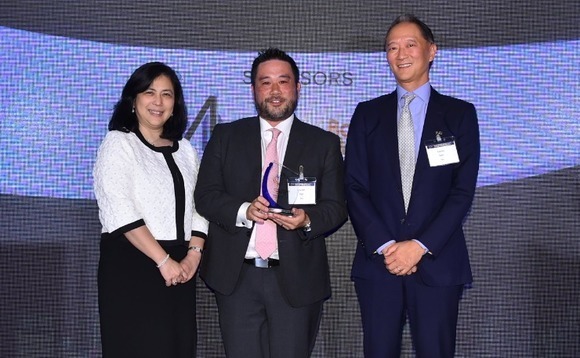
Pictured: Lincoln Pan (center) and David Kim (right) of PAG receive the Firm of the Year - Large Cap award from Baker McKenzie's Dorothea Koo
More on Greater China



Latest News

Asian GPs slow implementation of ESG policies - survey
Asia-based private equity firms are assigning more dedicated resources to environment, social, and governance (ESG) programmes, but policy changes have slowed in the past 12 months, in part due to concerns raised internally and by LPs, according to a...

Singapore fintech start-up LXA gets $10m seed round
New Enterprise Associates (NEA) has led a USD 10m seed round for Singapore’s LXA, a financial technology start-up launched by a former Asia senior executive at The Blackstone Group.
India's InCred announces $60m round, claims unicorn status
Indian non-bank lender InCred Financial Services said it has received INR 5bn (USD 60m) at a valuation of at least USD 1bn from unnamed investors including “a global private equity fund.”
Insight leads $50m round for Australia's Roller
Insight Partners has led a USD 50m round for Australia’s Roller, a venue management software provider specializing in family fun parks.