
PE-backed Junshi Biosciences shines on Star Market debut
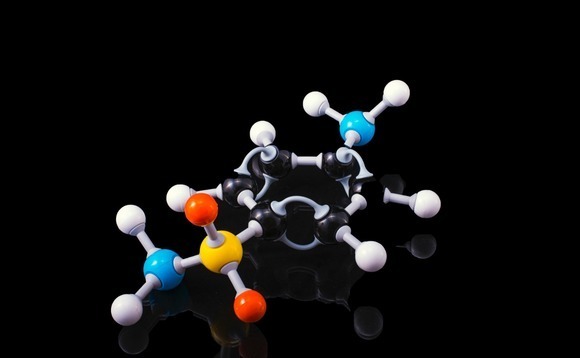
PE-backed Junshi Biosciences has become the first Chinese biotech company to list in Hong Kong and the mainland, following a strong debut on Shanghai's Star Market.
Junshi, which counts Loyal Valley Capital and Hillhouse Capital among its investors, raised RMB4.83 billion ($691 million) in its IPO, selling 87 million shares at RMB55.5 apiece.
The stock opened at RMB216 on its first day of trading on the Star Market - formally known as the Science & Technology Innovation Board - on July 15. It closed at RMB151, a 172% premium to the IPO price. As of midday on July 16, it was trading at RMB137.
Founded in 2016, Junshi listed in Hong Kong two years ago under provisions that allow IPOs by pre-revenue biotech companies. It previously traded on the National Equities Exchange & Quotations (NEEQ), also known as the New Third Board, but left the bourse in favor of the Star Market.
Loyal Valley Capital is Junshi's largest external investor, holding a 9.77% stake in the company's onshore entity prior to the offering. The GP told AVCJ that it first backed Junshi in 2016. Commitments have been made through three funds: an evergreen renminbi-denominated vehicle, its debut US dollar fund of $390 million, and a successor vehicle that closed in 2019 at $465 million.
Andy Lin, founding partner of Loyal Valley, added that Junshi is the only company he has backed in the PD-1 inhibitor space - a class of drugs that block a key protein in order to activate the immune system to attack tumors. It is used to treat certain types of cancer.
"Immunotherapy has brought a huge revolution in cancer treatment. The first and also most important product in immunotherapy is PD-1, and the key in choosing a specific PD-1 treatment is drug efficacy. We looked at a lot of clinical data and consulted many clinicians, and we concluded that Junshi had the best PD-1 product," he said.
Hillhouse held a 3.21% of Junshi's onshore entity prior to the offering, according to a filing. A renminbi fund managed by Hillhouse was one of five investors that committed RMB250 million in 2015 to support drug development efforts.
Commercial sales of Toripalimab, Junshi's self-developed PD-1 drug, started in February 2019. It was responsible for RMB774 million out of the company's RMB775 million revenue for that year. To expand the scope of the drug, more than 30 clinical trials for monotherapy and combination treatments are underway worldwide.
The company expects revenue of RMB456-560 million for the first half of 2020 - which would represent year-over-year growth of 47-81% - according to a statement. However, it still carries heavy losses due to R&D. The net loss rose from RMB744 million in 2018 to RMB775 million last year. It is projected to reach RMB547-665 million in the first half of 2020, up 77-115% year-on-year.
Other drug developers in China pursuing PD-1 treatments include Innovent Biologics. The PE-backed company listed in Hong Kong last year.
Latest News
Asian GPs slow implementation of ESG policies - survey
Asia-based private equity firms are assigning more dedicated resources to environment, social, and governance (ESG) programmes, but policy changes have slowed in the past 12 months, in part due to concerns raised internally and by LPs, according to a...

Singapore fintech start-up LXA gets $10m seed round
New Enterprise Associates (NEA) has led a USD 10m seed round for Singapore’s LXA, a financial technology start-up launched by a former Asia senior executive at The Blackstone Group.
India's InCred announces $60m round, claims unicorn status
Indian non-bank lender InCred Financial Services said it has received INR 5bn (USD 60m) at a valuation of at least USD 1bn from unnamed investors including “a global private equity fund.”
Insight leads $50m round for Australia's Roller
Insight Partners has led a USD 50m round for Australia’s Roller, a venue management software provider specializing in family fun parks.