

Q&A: C2 Partners' Chris Tay
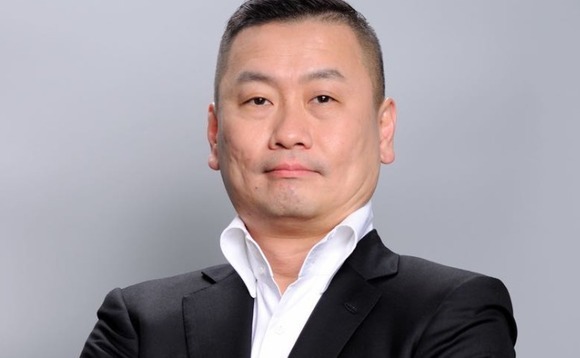
Chris Tay, an experienced food and beverage operator in China who now leads C2 Partners, discusses dining and social distancing, restaurant bankruptcies, and Luckin Coffee
Q: How badly has China's restaurant industry been impacted by the coronavirus outbreak?
A: On a scale of one to 10, it's eight. In Shanghai, the restaurants are back in business, but they are only operating at 30% capacity. In other cities, it is less than that. There are a lot of SME [small and medium-sized enterprise] restaurant operators that aren't coming back. They don't have access to enough capital to sustain themselves for a long period of cash burn. The banks are not lending to SMEs; they would rather lend money to big boys like McDonald's, KFC [owned by Yum China], Haidilao, Xibei and Yoshinowa. If it were not for the banks, some of these might have gone bankrupt.
Q: How quickly is demand coming back?
A: The first to come back, surprisingly, was hotpot. People had been cooped up at home for so long, they wanted to have something soupy and social. Generally, there is still a reluctance to eat out, especially at dinner time. People would rather stay home and cook, which is good for online grocery delivery businesses. Shanghai introduced social distancing, forcing restaurants to put groups of diners two meters apart, but this has largely been ignored. A lot of restaurant owners say that if the social distancing rule was strictly enforced, they wouldn't open because it costs too much money.
Q: Presumably, delivery businesses are holding up…
A: Yes, but restaurants are not factories. You must have a physical restaurant to produce the food and aggregators like Meituan Dianping and Ele.me take a 20-25% cut of each order. Restaurants need three orders for every one seat on their premises to break even. It's a double-edged sword. If you don't do delivery, you have no revenue. If you do delivery, you incur costs.
Q: So what's next for the industry?
A: In the near term, there is going to be more devastation. Right now, everyone is borrowing from friends and relatives, they are not paying their rent, and they have reduced labor costs by cutting headcount. You don't see them closing because they are trying to survive for as long as possible. Come back in six months and you will see who is left. Beyond that, consumer habits are already changing. People are wary of open spaces – shopping malls are empty. At the same time, landlords cannot rely on turning properties from retail into office space because demand isn't there. Tenants are looking for smaller spaces, and the more staff work from home, the less they go to restaurants.
Q: Fast forward 18 months, would you want to launch the China franchise for a recognize international fast food brand?
A: If you've already signed a franchise agreement, you've invested in getting it up and running, and you've got sites under renovation, you have no choice – you must move forwards. That's why Popeyes is supposed to be opening in Shanghai this week. If you haven't signed an agreement, don't rush it, and look around. Now is the time for restaurant owners to regroup and consolidate, keeping the good stores and closing the ones that are underperforming or don't have a lot of foot traffic.
Q: What would make you interested in a restaurant opportunity?
A: I'm looking at some opportunities in QSR [quick service restaurants]. You need a margin of 65-70% even to consider investing in a QSR business and then a minimum footprint of 100 stores located in certain parts of China, not spread out nationwide. These should be street-level locations, not just in shopping malls. A franchisee model should already be planned, if not already in place. And the cuisine should be Asian or Chinese, not so much Western. You need simple menus, nothing high end. It is still possible to do Michelin-star level stuff, but anything below that with large kitchens and big menus would be risky.
Q: There has been a lot of private equity investment in China QSR in recent years. What are the prospects for these deals?
A: Some of the more recent investments in QSR – over the past seven or eight years – were too optimistic in terms of payback. Restaurant chains can't run at private equity speed, so a seven-year runway is difficult. If you invested in something that already has 400-500 stores, maybe you have a chance, but if there are only 30-40 stores it is much harder. And with greenfield concepts, you are talking about a 10-year horizon. You need 50% year-on-year revenue growth and a high accuracy hit rate – every restaurant opened doesn't close within two years – and that doesn't really happen in China these days. COVID-19 is the equalizer, the litmus test of business model strength. It speeds up the damage, the closures, and the cash burn. If a restaurant chain is cash flow rich and large enough to borrow money, it will probably be fine. Many don't have that kind of firepower and the private equity investors aren't going to put in more money. Maybe these restaurant chains were going to go under within three years. With COVID-19, it's going to be three to six months.
Q: Investors often say you should only back a market leader or find an untapped niche. Does this still hold true?
A: It's easy to say that. Investing in a market leader works, but it takes time and you need cash to keep going for two years. As for market niches, they are hard to find. Everyone thought Luckin Coffee had that niche, but when something sounds too good to be true, it always is too good to be true.
Q: Luckin has positioned itself as a technology-enabled coffee shop chain…
A: The leading operators have sophisticated supply chains and delivery systems, but I don't see many restaurants that are technology-enabled in the customer-facing element. Yes, you can have facial recognition for payments and technology can play a role in ordering and delivery. But you still need hands and legs to cook the chicken and deliver it to the customer. Apps and loyalty programs – tools that allow you to know your customers and understand how they are using your products – are important at high price points. The lower the price point, the less important CRM [customer relationship management] becomes. While you can push special offers on fried chicken, it won't make as much difference as a high-end restaurant promoting deals on wine and events. Luckin's selling point isn't CRM, it's coupons, coupons, and more coupons. Everyone can give away freebies.
Q: What about focusing on smaller stores, with fewer cashiers and lower fixed costs?
A: Everyone is doing that – we hardly use cash in China now, it's WeChat Pay and Alipay. Luckin is different from the likes of Starbucks because it isn't selling an experience, just coffee. A friend of mine in the restaurant business said that if he were only selling food and didn't have to worry about decoration, he would close 80% of his outlets. He would keep 200 for delivery purposes. If it's not about the experience, it's about how cheap you can be. That's harder with restaurants. Coffee is coffee. Food has all kinds of tastes – salty, sweet, sour, spicy, umami. Maybe if you have only one or two SKUs [stock keeping units], the formula works. Otherwise not.
Q: On that basis, what's stopping convenience store chains from entering the space?
A: Nothing. I used to work for Family Mart in China. They have more than 2,000 stores in Shanghai alone and they are selling items to compete with McDonald's and KFC. They want to offer coffee, snacks, and ready-to-eat meals. The aim is to become something like 7Eleven in Taiwan or Japan.
Q: What other consumer areas are you interested in? Have you looked at cloud kitchens, for example?
A: I looked at cloud kitchens – or ghost kitchens – a couple of years ago. They are only workable in first-tier cities right now, but they will become more of a trend. I think in the past a lot of people dismissed them as asset heavy. In the next four or five years, though, we will see more of them. Other areas of interest to me include packaged goods typically sold in supermarkets and then health supplements and beauty products. These areas haven't been affected by COVID-19 so much, but I was looking at them long before the outbreak. I have a network of about one million point-of-sale channels across China, so I can offer something to consumer-packaged goods companies. We've done three deals on a project fund basis so far and these will ultimately be folded into our first fund.
Q: You've been involved in Salesforce.com's initiative to source personal protective equipment (PPE) as part of COVID-19 relief efforts. How did that come about?
A: One of my LPs is friends with [Salesforce.com founder] Marc Benioff and I was asked to get involved. It's a global effort and they got Alibaba Group and myself to work on it in China. We helped source millions of PPE items – mainly facial masks – over the course of three weeks and shipped them to the US. It's been a bit like the Wild West. We had to call up the police and make sure goods were arriving safely at the airport in Shanghai. If they aren't properly guarded, they would get stolen or someone else would come in at the last minute and pay a higher price. Unfortunately, this problem is widespread.
More on Greater China



Latest News

Asian GPs slow implementation of ESG policies - survey
Asia-based private equity firms are assigning more dedicated resources to environment, social, and governance (ESG) programmes, but policy changes have slowed in the past 12 months, in part due to concerns raised internally and by LPs, according to a...

Singapore fintech start-up LXA gets $10m seed round
New Enterprise Associates (NEA) has led a USD 10m seed round for Singapore’s LXA, a financial technology start-up launched by a former Asia senior executive at The Blackstone Group.

India's InCred announces $60m round, claims unicorn status
Indian non-bank lender InCred Financial Services said it has received INR 5bn (USD 60m) at a valuation of at least USD 1bn from unnamed investors including “a global private equity fund.”

Insight leads $50m round for Australia's Roller
Insight Partners has led a USD 50m round for Australia’s Roller, a venue management software provider specializing in family fun parks.