

Q&A: Permira's Kurt Bjorklund
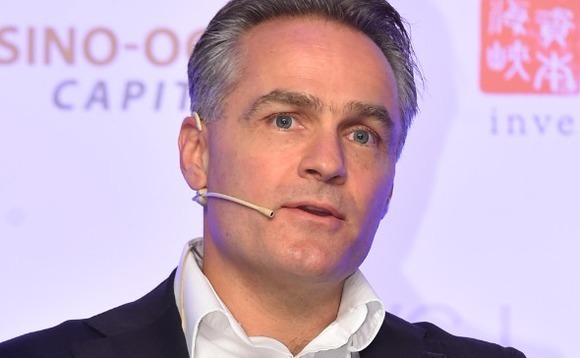
Kurt Bjorklund, a co-managing partner at Permira, explains how a sector-focused investment style is becoming indispensable in Asia’s competitive and disruption-prone markets
Q: What is Permira's approach to investment?
A: We look for global themes where there's substantially more GDP growth and disruptive value creation opportunities, and then we create number-one market players in those themes. Whatever the business, we have a really clear point of view on what the dynamics are in that theme and a specific team that spends all their time looking at it. We deploy that strategy in the US, Europe, and Asia alike, so geographic borders are of less relevance. What matters to us is that we're one of the top investors in the world in the themes that we look at and that we recognize the patterns of a great business wherever it is based.
Q: What is the thinking behind this strategy?
A: If you look at the longer term in our industry, you can either go for a strategy that is about scale as a competitive weapon or specialization and quality. You see firms building scale, assets under management, driving revenue with management fees, and accepting progressively lower returns. Then you have other firms like us going deeper into segments. This is exactly what we saw 10-30 years ago in public equities when generalist boutiques bifurcated into index funds and some specialist players delivered real alpha. The same thing is rapidly happening in private equity.
Q: How does that influence organization of the firm?
A: We think more about themes than sectors in the sense that all of these themes go across sectors. The structure of the firm is sectors, but commercially, we're more like a long-term project business. We put together taskforces to develop insights, and the entrepreneurial culture evolves on a bottom-up basis as we see more opportunities. It's like a slow-moving kaleidoscope – every year, you shake it up and the kaleidoscope will look different because the market maturity, our capabilities, and the competitive landscape shifts.
Q: How do you achieve differentiation?
A: The great thing about this strategy is there are plenty of themes that you can go for and plenty of space to compete. But in our themes, we observe only 2-4 firms globally that are really great, which means it's typically the same usual suspects competing. Our angle is that we are one of the few firms with this strategy that also has a global platform, which we find very compatible culturally, partly due to our European heritage. We also have a very strong technology focused on building horizontals in terms of origination, idea creation, and value creation. The horizontals will be things like workflow automation, data analytics, machine learning, and online customer acquisition. We have internal teams focusing on all of those.
Q: What is your approach to teambuilding?
A: It doesn't matter where people sit globally in our model. The team that has the sector knowledge looks at the theme in partnership with a local team, and they own the deal together. We believe that we need a team on the ground who can speak the language with a very strong thematic overlay on what those people learn, develop insight in, and how they collaborate across the firm. Most Asia-based GPs have almost the opposite view on that – they're focusing more on populating the map with a geographic presence and looking less at building capabilities within those themes.
Q: What are your priorities in Asia?
A: The Japanese market is interesting, so we want to have people on the ground in Tokyo, We absolutely want to have a mainland China capable team. Australia is easier because there are enough English speakers in the firm that we can always find people to execute there. We have chosen today not to build a capability for India, although that may change. We will look at Southeast Asia, but to build individual teams for each country would make no sense. Asia is a fantastic opportunity for us to grow this model of building pattern recognition in themes just by virtue of economic growth and the earlier phase of the market maturing.
Q: Permira has focused on some unusual themes…
A: The more complex and unusual the theme is, the better it lends itself to specialization and the higher the opportunity is for alpha. In fish farming, for example, we started looking at the space a decade ago and decided we weren't going to invest directly in the fish farming industry but in the derivatives one or two degrees removed from it. We bought the global leader in aquatic health, which immunizes fish in the farms to protect them against disease. We have also looked at the feed segment with a company called Grobest in Taiwan, which is the largest privately held platform for shrimp and fish farming feed products.
Q: How did you leverage your global experience in this instance?
A: We had a couple of runs owning platforms in the fish farming feed space in Europe and the US, but we wanted to pivot to Asia where fish farming has the highest growth and the maturity in terms of consolidating feed platforms is the lowest. Grobest was the result of more than a decade of building thematic insight and depth into that space. We have a similar play in aircraft parts supply with a company called Topcast. These industries tend to consolidate towards one market-leading platform. We've seen that dynamic for 30 years in the US and 20 years in Europe, specifically in aircraft distribution, and we expect the same thing to happen in Asia.
Q: Will you become more specialized over time?
A: No, but we're becoming better at being specialized, more geography agnostic, and better at playing to our strengths. If you look at European private equity 15 years ago, we were all relatively similar with limited differentiation on angles, capabilities, and insights, and you ended up with 20 firms competing for the same asset. Today, the competitive universe per segment is narrowing. There are not more than a handful of firms in the world going for that specialization and they're not compromising on returns. Our control-buyout portfolio of 43 companies is generating 18-20% annual revenue growth.
Q: What is your investment capacity?
A: We just finished raising our EUR11 billion ($12.2 billion) flagship pool of capital. We also we have a $1.7 billion growth fund. That's a relatively concentrated portfolio where we expect to invest in 10-12 companies. Both deploy with the same team and target the same themes globally. With those two products, we can cover the whole range from control-buyouts of $1-2 billion to minority opportunities where we can take a 30-40% stake.
Q: What is the rationale behind the growth fund?
A: Over the last decade, we have tilted more and more towards growth, and the more you do that, the younger the companies are. You're more likely to have a founding entrepreneur in charge and more likely to have other equity investors that don't want to sell. We were increasingly coming across situations where the company was not for sale, and we were running out of tools in the toolbox to invest in some of the great themes we were finding. So we developed an adjacent product to invest in those themes, and it lends itself to opportunities in Asia where you will often have these situations.
Q: Is more of the growth coming from disruptive models?
A: Yes, absolutely. The market share of growth in the world taken by disruptive companies has increased, and there will be more companies that are growing profit pools rapidly at the expense of old profit pools. This is why it's hard to invest today in big traditional models or brands – that's a really dangerous place to be. One of the most important things to get right up front is being on the right or wrong side of the disruption curve. If you're on the right side, then you have market leadership, and that gives you huge optionality with what you can do with companies. If you're on the wrong side, you can think you're buying things cheap and there's value and costs to take out, but you're going to be swimming upriver for the next decade.
Q: What other challenges does disruption pose?
A: What you can do with technology across all segments is accelerating. We're living in a golden era of entrepreneurial opportunity for humankind, and we're so lucky to be here now. I felt growth was on average undervalued 5-10 years ago, but for the last 2-3 years, it has probably been overvalued on average. It's really easy to make mistakes when the markets are this hot and aggressive. There are examples right now where people have made very significant missteps that are more about momentum investing than insight. That's why it's so important to become specialized to understand in depth what you're doing.
More on GPs


Latest News

Asian GPs slow implementation of ESG policies - survey
Asia-based private equity firms are assigning more dedicated resources to environment, social, and governance (ESG) programmes, but policy changes have slowed in the past 12 months, in part due to concerns raised internally and by LPs, according to a...

Singapore fintech start-up LXA gets $10m seed round
New Enterprise Associates (NEA) has led a USD 10m seed round for Singapore’s LXA, a financial technology start-up launched by a former Asia senior executive at The Blackstone Group.

India's InCred announces $60m round, claims unicorn status
Indian non-bank lender InCred Financial Services said it has received INR 5bn (USD 60m) at a valuation of at least USD 1bn from unnamed investors including “a global private equity fund.”

Insight leads $50m round for Australia's Roller
Insight Partners has led a USD 50m round for Australia’s Roller, a venue management software provider specializing in family fun parks.