
Q&A: FidelisWorld Group's Anand Krishnan
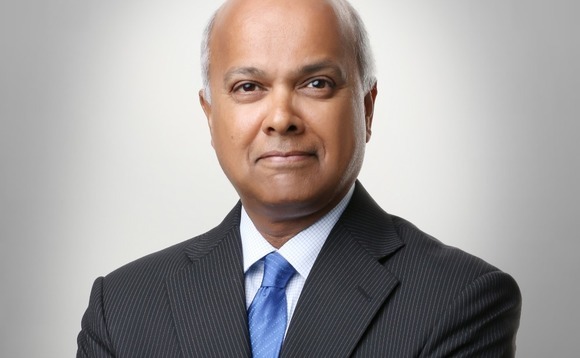
Anand Krishnan, managing partner of FidelisWorld Group, traces the evolution of a strategy focused on winning wallet share from Indian millennials who live at the nexus of technology and entertainment
Q: From where did your investment thesis originate?
A: When I was involved in the Madam Tussauds deal in my prior life [as CEO of Dubai International Capital] it was a constant effort to see how we could best create value beyond the shores of the UK. When we invested in the company it had a large museum in London and smaller ones in Hong Kong and in New York. The purpose was to get wallet share of visitors to the UK, so the first thing we did was bring other assets together that could create value for Madam Tussauds. We acquired the London Eye, Alton Towers Resort and other properties, turning the company into a one-stop-shop for visitors. Then we took it to international locations. We are trying to do much the same at FidelisWorld, but we are applying it to India – as well as overseas markets into which Indian companies are expanding – and we are focusing on applied technology, media and entertainment, and lifestyle.
Q: What do you mean by applied technology?
We don't want to invest in technology – we are not getting into Uber or WhatsApp – but in business models around technology where we can create value.
Q: What are you looking for in prospective portfolio companies?
A: Typically, we only get involved after they become profitable or where we can see a clear path to break even or profitability in six to nine months. They must be number one or two in their market, with a product we believe can stay ahead of the curve, and a management team able to take us through the lifecycle of our investment. We are not interested in buyouts; we want management teams that are aligned with us and buy into the strategy before we even invest. We want to play a significant role in the strategic growth of companies, and from our perspective, that means ensuring domestic growth is achieved and driving global expansion. In certain markets, IP [intellectual property] doesn't afford the valuations it is supposed to get, and when we take them overseas the valuations open up. At the end of it all, the exit space is widened, so there are global players – strategic or financial investors – that understand what these companies can do for them in the future.
Q: To what extent has this played out with existing portfolio companies?
A: Smaaash Entertainment [which runs sports-centric digital entertainment centers] only had one location when we invested, but it was profitable. There are now 45 in India and we just launched one of the largest footprints in Jeddah, 130,000 square feet of Smaaash. The same is happening in other parts of the world. Techfront [a provider of in-stadium digital display systems, now exited] and Sportz Interactive [a data and analytics platform] have also gone from being India-only to global companies.
Q: Are you looking at e-sports opportunities beyond Smaaash?
A: E-sports is one of many up and coming categories, but it is difficult to see it evolving in our markets the way it is evolving in East Asia with teams participating in fully-fledged leagues. If we look at it more broadly – the software development and artistic work that goes into video games and gaming in general as a wider touchpoint for e-sports – then we are seeing a push. This is especially apparent in entertainment, whether it's through OTT [over-the-top] consumption of content or through other tech-enabled streaming platforms.
Q: What are the risks of investing in content-based businesses?
A: It depends on the strengths when we go in. We stay away from businesses that involve buying rights. I don't think those are right for private equity. We want to invest in businesses that continue to evolve in terms of things like software, and where we are the IP owner rather than the IP licenser. I've seen lots of situations where private equity goes in and the fees for rights just keep escalating every year. There is a lot of pressure on investors to pony up more money, and that's just not what we want to be doing.
Q: How much competition do you see in your target space?
A: I think we are differentiated not only in our strategy but also in our timing. We go in with that $15-25 million check and a lot of people I see doing similar stuff are in the $30-40 million range. We are at an earlier stage of growth equity. We might end up selling to a larger financial investor [as was the case with Techfront] but we want to have IPO and trade sale exit options as well.
Q: What else can a sector specialist strategy do for companies?
A: Where possible, we want them to work with each other. The common theme is we are going after a specific type of consumer. India is a very young nation. There is a generation of people coming up who, like millennials everywhere, have disposable income and are spending more on experiences and lifestyle than they are on hard assets. Various studies show that 55% of their marginal income, after spending on essentials, is being spent in sectors that we invest in. These consumers are aware of what is out there, many have traveled abroad, and they are keen to get services on demand. They are also likely to allocate wallet share to new types of entertainment – whether that's going to Smaaash, going to a gym, going to watch sporting events, streaming sports with a second screen that gives analytics – and to clean and organic products. We ask ourselves what these consumers want and what it is we are doing to tap into that demand.
Latest News
Asian GPs slow implementation of ESG policies - survey
Asia-based private equity firms are assigning more dedicated resources to environment, social, and governance (ESG) programmes, but policy changes have slowed in the past 12 months, in part due to concerns raised internally and by LPs, according to a...

Singapore fintech start-up LXA gets $10m seed round
New Enterprise Associates (NEA) has led a USD 10m seed round for Singapore’s LXA, a financial technology start-up launched by a former Asia senior executive at The Blackstone Group.

India's InCred announces $60m round, claims unicorn status
Indian non-bank lender InCred Financial Services said it has received INR 5bn (USD 60m) at a valuation of at least USD 1bn from unnamed investors including “a global private equity fund.”

Insight leads $50m round for Australia's Roller
Insight Partners has led a USD 50m round for Australia’s Roller, a venue management software provider specializing in family fun parks.