

Q&A: TPG's Jon Winkelried
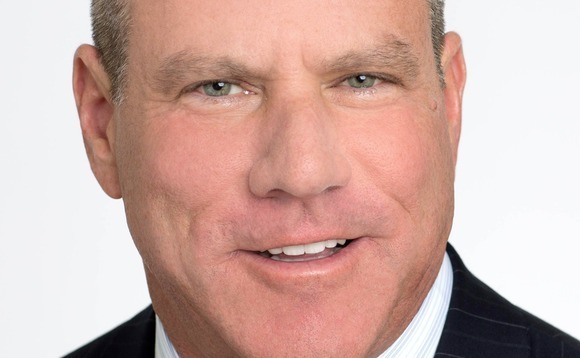
Jon Winkelried, co-CEO of TPG, on taking the helm at a founder-led firm, finding growth opportunities in complementary strategies, and negotiating a difficult year for the Rise Fund
Q: What led to your recruitment by TPG in 2015?
A: TPG has grown a lot in the last 25 years. It was a single fund, a buyout strategy, and it grew out of a family office heritage. Around the global financial crisis, it built a bunch of different businesses – growth equity, real estate, credit, public equity. David and Jim ran the firm together through all those years and it was becoming clear that running a multi-strategy business was a different proposition than a monoline private equity strategy. When they called me, David had moved into a chairman role. Jim was raised as an investor and spent most of his life investing, whereas I had spent 27 years at Goldman running different divisions. At Goldman, as you become more senior, success is predicated on how you drive growth and allocate capital, so I had experience running multi-headed beasts in a practical sense. Our skillsets were complementary in that respect. I had also worked with most of the large private equity firms as clients, so I had a pretty good sense for how TPG thought about investing. Ultimately, I felt my skillset, plus where the firm was in its evolution, made for an intriguing fit.
Q: Was it difficult joining a founder-led firm in a leadership position?
A: When you look at the prospects of coming into a firm at the co-CEO level with a co-founder, you can't know for sure if it's going to work or not. It's not something you see very often, and there is a good reason for that. I had to understand and get comfortable with where Jim's head was and how other senior partners at the firm felt about someone joining from the outside. I spent five or six months going through that. It would be naïve to think it would be a slam dunk, because you are dealing with many people who have been in their positions for a long time. I was 55 years old when they approached me, so I wasn't doing it because I was looking for a job. But, the prospect of joining a unique firm like TPG and the opportunity to move to the Bay Area was an attractive combination. During my career, I'd only been in New York and London, and found that when I moved to London for a few years, the change of scenery was energizing. Between my time at Goldman and TPG I had been running my own family office, so I was going to the Bay Area quite frequently to meet companies. I thought I would learn a lot by being in San Francisco. It may sound strange, but I don't think I would have taken the job if it were in New York.
Q: What were your initial priorities?
A: In 2015, only one of TPG's businesses could really be called mature. In private equity, achieving scale means getting multiple fund cycles under your belt. Some of the metrics you look at in terms of the operating leverage in a business – such as assets under management to investment professionals – aren't there when you're on Funds I and II. Performance is critical, but there are also other important considerations in terms of resource allocation. My priorities were to take stock of where we were and figure out how I could be a catalyst to help the firm's businesses grow. There also had to be more discipline around the process, so I spent time reviewing how much money the firm was contributing to each business; assessing whether headcount and structure were correct and if incentive and reward structures were aligned with performance; holding people accountable to a certain standard of performance; and looking at our infrastructure and how it would be able to scale. On top of all that, I wanted to get deeper into investment. I still allocate a portion of my time to attending investment committee meetings, running two portfolio company boards, and helping people source deals.
Q: How has the business developed since then?
A: When I came in, the firm's assets under management were about $60 billion. We will finish the year around $111 billion, so it's almost doubled in four years. One thing I've tried to instill is the concept of being innovative and commercial about how we build our businesses. Are there obvious strategies that we haven't been pursuing that we should? For example, we raised a fund called TPG Tech Adjacencies because we were seeing a number of interesting opportunities out of our tech franchise that didn't fit the core definition of what we put in our funds, either because they were non-control deals or we weren't getting governance rights. The risk-return characteristics were slightly different. We raised $1.6 billion, mostly from LPs in our other strategies. Like others in the industry, we are moving from a capital investment business to a capital solutions business. You must have tools that allow you to be in dialogues with as many interesting companies in your verticals as possible. If you are out there participating in the market, your companies will create opportunities for you. Very few of the things we look at now are classically intermediated by banks. That's the next evolution of the industry.
Q: In what other ways is this capital solutions approach manifested?
A: For TPG Capital VIII, rather than raise another jumbo fund, we decided to stay around the same size ($11.5 billion) and our investors liked that. We also raised TPG Healthcare Partners, a $2.7 billion healthcare sidecar. We are deep in healthcare all over the world, but we don't think it is appropriate to have a 40% healthcare concentration in our fund. We gave LPs the choice of coming into the main fund, or the main fund and the healthcare fund in proportionality. We also revolutionized the world of impact investing with the creation of the $2.1 billion Rise Fund. No firm prior to that had thought about impact investing at scale. Moreover, we committed to underwriting private equity returns while holding ourselves accountable for creating a measurement system for impact. We created the IMM, or the impact multiple of money, which is an expression of how much outward impact a company has for every $1 put in. We created an internal organization designed to calculate and track the IMM and spun that into an independent organization called Y Analytics. In my entire career, I don't think I have ever seen a business evolution fund structure – in private equity at least – drive so much change so quickly.
Q: Bill McGlashan, who led the Rise Fund, departed TPG earlier this year following a college bribery scandal. How do you deal with the fallout?
A: The context is important. The arrest and allegations in the Varsity Blues matter obviously created significant problems, both for Bill and for the firm, but the misconduct alleged involved behavior in Bill's private life. The government did not claim Bill was using TPG as a platform for fraudulent activity. I have lived through crisis management situations over the course of my career and the basic tenets are very simple. You try to make decisions quickly and decisively because we are in a confidence and trust business. We communicated clearly and transparently with LPs, our own people, and all other major stakeholders. We responded to questions and addressed the issues head-on. Understandably, some LPs wanted us to confirm that the behavior described by the government in the charging documents didn't transfer into any of Bill's business activities at TPG. Following a thorough internal investigation conducted by an outside law firm, we were able to confirm it had not, and we reported the findings to all our stakeholders. Lastly, we dealt with Bill's economic interests in our funds aggressively, because people wanted to know, especially LPs, that their investment in TPG funds and the economics created weren't going to be leaking outside to him. On all these actions, we got pretty good marks from our constituencies both inside and outside TPG. We were already in the market with Rise II, with $700 million of first close commitments, but we made the decision to release them all. When we came back to market our LPs recommitted, and we recently closed on more than $1.7 billion of commitments. Jim and I also went on the road to meet face-to-face with as many LPs as possible. That kind of personal contact is such an important part of the communication process that I think ultimately helped us maintain a high degree of confidence from all stakeholders.
Q: Is TPG's future building more customized products around the core strategies?
A: Your core strategies are where you have the most critical mass, where you have the most strength and flow. But it's important to pay attention to how the market is evolving. Secondaries has become an increasingly important part of our ecosystem over the past 10 years. Major firms are looking to use secondary structures to return capital in a more disciplined way. We were interested in getting involved in the space, and at one point, considered hiring a team in the US. We weren't able to structure it the way we wanted to, so we have looked to other growth areas in the space. We took a minority position in NewQuest Capital Partners, a leading secondaries firm focused on the APAC region. We found a partner there, CEO Darren Massara, who shared our vision. He thought TPG could help him build the business. As the private equity asset class gets larger, return of capital becomes more important, and fund lives tend to be longer, sponsor-to-sponsor activity is becoming increasingly important on both a primary and secondary basis.
Q: Is buying stakes in other investment firms going to be the exception or the rule?
A: We have grown most of our businesses organically, largely on the premise of internal talent, but we are open to these types of opportunities when the fit is right. People have to want to work together; it's not like finding someone's price and paying it. We've done this with NewQuest, and with Harlem Capital Partners. I've been trying to generate momentum around creating a business to back emerging managers, specifically of diverse or underrepresented populations. Harlem Capital is a young venture capital firm committed to backing minority and women entrepreneurs across the US. They have an innovative sourcing model, where they not only use word of mouth but also social media to extend their reach. Henri and Jarrid, the firm's founders, are also incredibly compelling individuals – super hungry and very commercial. We decided to take a minority position in the GP and invest in their first fund, effectively plugging them into our system to help them scale. The fund had a target of $25 million and they have already shot past that.
Q: How does Harlem Capital fit into TPG's broader efforts on diversity?
A: We are trying to look at diversity in a very non-traditional way. On a relative basis we are not doing badly in terms of the composition of our people, but we are doing poorly on an absolute basis. You can't just solve your diversity problem by hiring more black, Latino or LGTBQ professionals. A much more effective way is to create an organization that is inclusive and interesting, and people will be attracted to it. Every black person in private equity or venture in the US knows about Harlem Capital. That shines a spotlight on what we are doing, and it changes the dialogue with prospective employees. Another example is an initiative we launched about two years ago to change the gender diversity of the boards of private companies where we have control or significant influence. So far, we have helped place 59 women on portfolio boards. By virtue of this effort, we have created a database of more than 750 women with interesting backgrounds and a desire to serve on boards. This has created a conduit through which women in the professional world who want to be connected to private equity become more familiar with us and what we are doing. I get inbound inquiries all the time as a result. We are also hiring differently – our last two associate classes have been 50% diverse – but we want to do more than that. Attracting people is easier when they can see the ways you're prioritizing diversity and inclusion.
More on North America




Latest News

Asian GPs slow implementation of ESG policies - survey
Asia-based private equity firms are assigning more dedicated resources to environment, social, and governance (ESG) programmes, but policy changes have slowed in the past 12 months, in part due to concerns raised internally and by LPs, according to a...

Singapore fintech start-up LXA gets $10m seed round
New Enterprise Associates (NEA) has led a USD 10m seed round for Singapore’s LXA, a financial technology start-up launched by a former Asia senior executive at The Blackstone Group.

India's InCred announces $60m round, claims unicorn status
Indian non-bank lender InCred Financial Services said it has received INR 5bn (USD 60m) at a valuation of at least USD 1bn from unnamed investors including “a global private equity fund.”
Insight leads $50m round for Australia's Roller
Insight Partners has led a USD 50m round for Australia’s Roller, a venue management software provider specializing in family fun parks.