

The framework for green investing
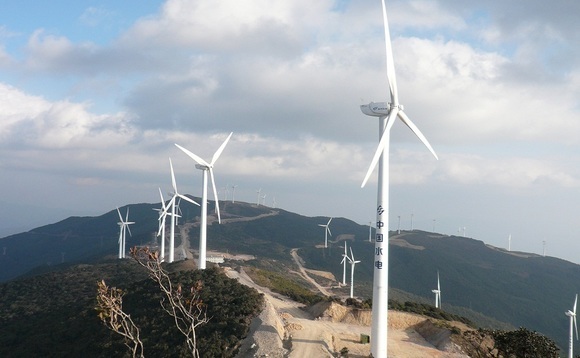
While agreement on global emissions targets may be in abeyance, national policies and regulatory changes are spurring the development of renewable energy projects across Asia – and particularly in China – say international legal teams.
In the green space, opportunities for the private sector are heavily influenced and in fact often created by laws, regulations and government policies. AVCJ speaks with the law firms that advise corporations and private equity firms to find out how regulatory shifts are spurring on development in the industry.
Paul Curnow, a partner in Baker & McKenzie's Sydney office, explains that while international agreement on GHG emission limits may be stalled, the progress seen in the renewables markets of China and India remains impressive and is actually accelerating:
"At the local level there are ambitious renewable energy targets with feed-in tariffs, energy efficiency targets, items like that. And when you look at the financiers moving in, whether they are debt financiers or equity investors doing their due diligence on this space, they are very focused on domestic policy settings," he told AVCJ. "They're trying to ascertain what's going to be around for the next 5-10-15 years to give assets their long-term value, because this is very much bound up in the policy and regulatory frameworks."
Key players
For the past two years or so, much of the development in the renewables space seen has been spear-headed by two types of groups: the many state-owned utilities, especially in China, who've been required by government mandates to diversify their energy portfolios; and the growing number of boutique renewable energy and carbon project developers now engaged, most noticeably the Europeans.
The mushrooming number of wind farms, and areas of exploration like turbine manufacture and new technology are all signs that SOEs are getting involved. And in relation to the latter, "A lot of the region's renewables projects have been done in the context of the Carbon Development Mechanism (CDM) under the Kyoto Protocols, so there's a carbon angle to many of these projects. But most projects are smallish in scale."
However, with ongoing concerns of what the shape of the various regulatory regimes will take post-2012, when the Kyoto provisions expire, there are questions surrounding the opportunties.
At the same time, Curnow points to the growing interest he sees among private equity and other funds managers, even though this is still at an early and essentially learning stage. He sees them as coming to stay, and play. "Interest is noticeably picking up," he says.
Where the action is
From a geographic standpoint, China and India have captured – and/or generated – the lion's share of the renewables and clean energy investment raised so far. This also means that in China and India investment and the regulatory framework have been most closely aligned, offering incentives, subsidies and other motivations to ensure success. As a result, the two are now in the top five globally for installed renewable capacity. The same wave is building across the region.
"We're seeing it emerge now across Southeast Asia and beyond," Curnow observes. "Thailand put a system of preferential feed-in tariffs in place not long ago. Now the Philippines and Malaysia are looking to do the same. And down in Australia, we've got a 20% renewables target which is going to require about 40,000 megawatt hours of renewable generating capacity to come online by 2020; so there's a significant investment opportunity in that as well."
Cutting-edge China?
In the PRC however, regulatory change that goes further still holds out the prospect of much broader engagement on the part of the private sector, including international players.
Wan Li, a partner in DLA Piper's Shanghai office told AVCJ, "The Chinese government is no longer just focused on pure economics and GDP considerations in terms of its policies. Rather, they're now prioritizing the development sustainability of social economics in China," he explained. "That's why some significant new laws, regulations and a couple of amendments to existing laws have been put in place.
"For instance, a number of wind power regulations were amended recently. Their basic intent is to encourage foreign investment in various sub-sectors in this area. In the past any foreign investment aimed at getting into, say, wind power, CDM projects and the like, faced the limitation that local or domestic equipment had to comprise at least 70%. The government has now scrapped this requirement. Foreign investors can bring their equipment, materials and technologies, as well as their capital. They are no longer obligated to use the Chinese version. And I think this has much opened the door for them."
Li further notes that grid companies are now obligated to purchase all renewable power off-take, a change which provides a welcome market guarantee of sorts. But a report issued by law firm Norton Rose echoes his view that it is very early days in terms of projecting how this promise will play out in practice.
The letter of the law vs common practice
Norton Rose points out that the December 2009 amendments were backed by a regulatory framework that introduced new renewable energy targets for local governments, preferential tax treatment and access to cheap credit for clean energy developers, along with preferential tariffs for wind, biomass and solar power.
In theory, the report says, this updated framework sets down a solid base from which to promote market development. Given the explosive growth seen over the past couple of years, it appears to have succeeded. But Norton Rose contends that the implementation of these laws has not been effective, and that gaps are starting to emerge.
"At the heart of the problem is the renewables regulatory framework, which imposes the core burden for the promotion of renewable energy upon the grid, and whose implementation relies on project companies enforcing rights against the grid. China's grid is ultimately owned by two very powerful, but under-resourced, state-owned grid companies that operate the grid through local subsidiaries in each province."
"For the most part, project companies are reluctant to confront these grid companies for fear they will be shut out of future projects; and as a result, few breaches are actually enforced. Additionally, projects with which we have been involved have encountered 12-month delays for grid connection, and project companies have received the renewable energy portion of the tariff six months late, with some grid companies in some parts of the country not accepting dispatch during certain periods."
So while the revisions of the Renewable Energy Law aim to address these issues by prodding the grid to deliver on its obligations, how effective they will be remains to be seen. Many of the problems arise from capacity and cash flow issues, and sponsors' reluctance to enforce rights, rather than a lack of clarity in the regulatory framework.
Other opportunities – and challenges
Beyond wind, which is where most of the activity in China and India has been to date, another range of opportunities in various sectors is heating up, if not actually coming to a boil.
"I'd say large-scale solar is the next big thing," Baker & McKenzie's Curnow asserts. "You've seen the solar photo-voltaic (PV) price drop sharply over the past couple of years, mostly because of the original sharp drop in silicon prices. And new advances in those technologies mean this cost curve will fall even further. [This] means that large-scale solar farms beyond just industrial building applications or residential applications will become compelling investments, particularly in India, where the government has just announced a new $20 billion fund to help get this off the ground."
Other promising areas he notes, particularly in Southeast Asia, are waste-to-energy and biomass projects. These too have their challenges, the biggest being size.
"Outside of large-scale wind and solar in China and India, a lot of the other opportunities that are in biomass, small-scale hydro, small solar and some wind. But in countries like the Philippines and Vietnam, for instance, projects are much smaller, which means their capital requirements are also smaller. So they pass under the radar of both equity investors and debt financiers."
Typically, banks – many foreign banks and investment banks in Asia – will only look at a project if it's more than $50 million in terms of required financing. "That's a real problem at present, and solving it is a work-in-progress."
Aggregation will be a big part of the solution, and a few players of Curnow's acquaintance are investigating viable structures in aid of achieving it.
Curnow and his colleague, Kelvin Poa – who is an associate principal from Baker & McKenzie Wong & Leow in Singapore – are looking to support fund setup in the Lion City with that in mind, founded on the idea that this lesser-publicized space is at a much earlier stage, but is poised to enjoy vigorous growth in the not too distant future.
"This is certainly an area where funds can play a role, because if you can aggregate the investment interest through a fund while at the same time spreading the risk, from the investors' point of view, across a full range of projects, different jurisdictions and technology types, that's one way to match up the two sides," he conjectures.
"There's more to it than that, of course. You then need people to manage the fund in a way where they've got the resources to really originate lots of small projects and manage them effectively, to ensure that the value is extracted. And that's resource intensive."
One catalyst that could be a great help is government guarantees around some of the risks. "With many smaller projects, because they're small and also because of the type of project they are, there are credit risks with counter-parties, plus (especially with biomass) risks around supply. The ADB, World Bank and others could step in and provide some kind of assurances, some of the export credit agencies too. Guarantees to alleviate risk will be key in growing these markets."
More on Cleantech


Latest News

Asian GPs slow implementation of ESG policies - survey
Asia-based private equity firms are assigning more dedicated resources to environment, social, and governance (ESG) programmes, but policy changes have slowed in the past 12 months, in part due to concerns raised internally and by LPs, according to a...

Singapore fintech start-up LXA gets $10m seed round
New Enterprise Associates (NEA) has led a USD 10m seed round for Singapore’s LXA, a financial technology start-up launched by a former Asia senior executive at The Blackstone Group.
India's InCred announces $60m round, claims unicorn status
Indian non-bank lender InCred Financial Services said it has received INR 5bn (USD 60m) at a valuation of at least USD 1bn from unnamed investors including “a global private equity fund.”

Insight leads $50m round for Australia's Roller
Insight Partners has led a USD 50m round for Australia’s Roller, a venue management software provider specializing in family fun parks.