China: Dangerous liaisons?
Where are you looking to allocate capital? When AVCJ asked global LPs this question, the majority said: “China.”
At the same time, when we asked about their concerns, many conceded honestly that they are worried about who is managing their capital. The conclusion is that China investing has two major and somewhat opposing characteristics: attraction, and risk.
Just how to mitigate the risks of investing in China, and still get the returns that the market could conceivably deliver is primarily a matter of due diligence, both pre-investment and post-investment. Many GPs have said, however, that conducting proper due diligence is so costly in terms of money and time, that they tend not to spend as much of either commodity investigating target investees as LPs may want.
Whether this is a real risk, or simply an issue of alignment, remains to be seen.
Emerging risks
Gong Lixun, Partner at Lunar Capital, told AVCJ that "sustainability and scalability" are two major concerns when speaking about the larger issue of investing in China. "One of our primary concerns has always been whether a target company's business model is sustainable and scalable for growth capital funding. Specifically, we consider whether the company has a strong franchise and rich asset base. We also put significant time and effort into ensuring that our target companies have management teams capable of managing the growth and scale that come from a large capital injection.
Furthermore, extensive due diligence must be conducted to ensure the validity of the business," he concluded.
Johannes Schoeter, Founding Partner at China New Enterprise Investment, said, "If we are aware of what we can do and should not do, and know the rules in China, then the investment activities are quite all right." He added though, "We have to be more strict in due diligence than [in] developed economy countries." In China it is important not to overpay.
One of the highest priorities is to mitigate these risks as much as possible before investing. However, one risk investigator remarked that the pricing issue is much more important for them than the risk issues. A general process of investigation might take about four weeks, but in an emerging market like China – which does not have the usual commercial disciplines – investors might need to take more time to close deals, leading to greater pressure on those who have to deploy capital within the first one to three years of a fund's life.
Lixun said, "Private equity investing is inherently risky, and particularly so in China. We look to exhibit patience and discipline throughout the investment process, remain firm on our due diligence process even when competition for deals is fierce, and avoid the temptation of trying to find the next blockbuster deal... We emphasize patience in our corporate culture and have limited our fund sizes to enforce it. Specifically, we have averaged over one year of due diligence before closing a transaction to date."
Risk detection
In the current investment climate, the possibilities for Chinese portfolio companies and the inherent growth in the economy lay a strong foundation for good returns. However, these opportunities have to be properly priced against the associated risks.
Deidre Lo, Senior Vice President and Head of Corporate Intelligence at Hill & Associates Ltd. shared her view on the trend. "We hear that valuation is too high for private deals, but the risk of investing in China is not often mentioned as a ‘deal stopper' unless something truly egregious surfaces."
This valuation gap between sellers and buyers over Chinese assets still remains a big issue for private equity players. They must consider the balance of pricing and the possible risks which might affect a company's performance and corporate governance.
Schoeter at China New Enterprise Investment said proprietary deal sourcing is very important to avoid getting involved in the pricing game. Though many risks remain, he said, Chinese companies often not only seek money. What they need is a long-term business partner to develop the company together.
Asked how to avoid risks when investing in China, Lo said, "There will always be risks wherever you invest, but generally if investors take their time to do their due diligence, they are more likely to avoid the risks. But, of course, investors may not always be able to drive the timetable, such as where it is a competitive situation."
Through many years of experience in this specific field, Hill & Associates's Lo shared the company's views on some of the key points to look out for in due diligence. She indicated these were, (1) verifying the identities of the individuals as an important starting point, as people can change their names to reinvent themselves in order to wipe away a dirty past; (2) doing independent cross-checking of the information that you have been given; and (3) making sure that you are backing the right people in the investee company, which would require having full awareness and understanding of all the relationships that could affect the investment. "Oftentimes, the decision-maker is not the person on record, so an investor would need to know who is actually pulling the strings."
Conflicts of interest frequently arise as issues. "You need to get comfortable that your investment will not ending up profiting another," Lo added.
AVCJ sources have noted that another major risk to investing in China is that, because China is open for business to the world, it is an incredible competitive market, and local Chinese companies are formidable.
"The only way to do really effective due diligence for a private equity investment in China is to spend time getting to know the management and controlling shareholder and developing relationships with them," says Jack Lange, Partner at Paul, Weiss, Rifkind, Wharton & Garrison. "Information will come out in bits and pieces over time, and only after a fairly lengthy process of getting to know each other will it become clear whether there is likely to be a fundamental compatibility between the company and the private equity investor."
Cultural issues around investment
Other practitioners see cultural issues, and China's history of commercial development, contributing to overall market risks. Dane Chamorro, Regional General Manager, Greater China/North Asia at Control Risks, told AVCJ, "Over the past twelve months, we saw much activity emerging in the first half of 2009, particularly in smaller-to-medium-sized deals in China. Few large-sized deals were available for big private equity firms – partly because these businesses were run by the first generation of founding members, who therefore have no interest in selling. Competition among private equity players is accelerating – and this trend is still continuing."
But he also noted there are major challenges for private equity players who look to involve themselves in Chinese companies because of serious issues like fraud, non-disclosure of documents and manipulation of accounts, to name but a few. "The integrity of the landscape is very challenging in China," he observed.
The due diligence process is therefore exceptionally important. The first step, he says, is to aggregate open source information like media reports, as well as other easily obtainable data, to achieve a basic understanding of the target company and the founder. Then, investment agents should talk to any people related to the company, including schoolmates of the founder, securities analysts, the financial community and other industry players, without disclosing their identity.
Some of Control Risks' clients request to see the target company's accounts. Unfortunately this is very difficult and not very reliable due to the lack of accurate information. The best way to investigate the financial side of a Chinese business is to watch where the money goes and who to. Unless a firm takes control of the company, it is very hard for firms to gain access to the financial flows of the business.
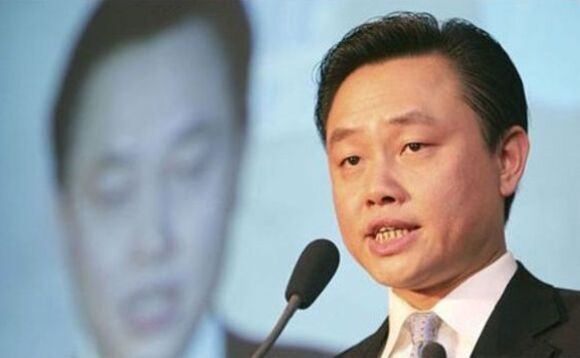
Recently, global media highlighted the investigation and conviction of Huang Guangyu, the founder of GOME Electrical Appliances, the PRC's biggest electronics chain, invested in by Bain Capital to the tune of $418 million. Many have asked why such an experienced firm would take a stake in the company with the founder's ongoing problems – and his potential for mischief. Perhaps Bain believed that it might be possible to remove him from the business, with the support of the current board and shareholders, but if so, this China story did not work out as they expected. Instead, Huang almost succeeded in removing Bain.
"A founder often does not give up when they sell a company [or] retain his/her role in the business structure," said Chamorro. "This has cultural significance in China, and some people remain attached to founder and maintain their royalty to them. Even though the founder has successfully exited, it will be still very difficult to run the business as the outsider."
Chamorro has his own theory about avoiding risks: S.T.A.I.R.S; which translates into Screen-for people risk; Train-re-educate; create an ethical expectation from outset; Audit-financial, compliance and general security records and practice; Investigate-allegations of malfeasance; Repeat-repeat once more; and System-have a robust compliance system involving ethics codes, hotlines, etc.
But in China, the due diligence process does not just apply to investee companies, but also frequently to GPs as well. Markus Ableitinger, Director and Head of Asia Investment Management at Capital Dynamics, said, "We look a lot into the chain of alignments such as operations, formation time of a firm, member's careers and ownership structure." He said that the firm also sees risk in the ownership structure of the firm, depending on whether the GP is owned by its managers, adding that it usually is a huge risk if you have a big institution with a private equity division. As well as analyzing transactions GPs have made in the past to reduce possible risks, "key man risk is always a huge issue," Ableitinger emphasized. "If you have one person in the firm who does everything, you're running the issue of having a key man risk. If he's not able to distribute, delegate, or let other people grow with him, then it's a huge risk as well."
Latest News
Asian GPs slow implementation of ESG policies - survey
Asia-based private equity firms are assigning more dedicated resources to environment, social, and governance (ESG) programmes, but policy changes have slowed in the past 12 months, in part due to concerns raised internally and by LPs, according to a...

Singapore fintech start-up LXA gets $10m seed round
New Enterprise Associates (NEA) has led a USD 10m seed round for Singapore’s LXA, a financial technology start-up launched by a former Asia senior executive at The Blackstone Group.

India's InCred announces $60m round, claims unicorn status
Indian non-bank lender InCred Financial Services said it has received INR 5bn (USD 60m) at a valuation of at least USD 1bn from unnamed investors including “a global private equity fund.”

Insight leads $50m round for Australia's Roller
Insight Partners has led a USD 50m round for Australia’s Roller, a venue management software provider specializing in family fun parks.