Star potential: Celebrities turn to VC
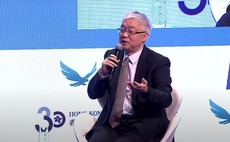
Chinese basketball star Yao Ming recently upped his involvement in private equity, prompting speculation that other Asian celebrities will follow suit. Can they be successful?
What works in the US doesn't necessarily work in Asia - it's the golden rule of investment in the region and industry veterans have countless war stories that attest to its veracity.
As such, more than a few eyebrows were raised when Yao Ming, China's former NBA star, announced last month that he had invested in two private equity funds. The ex-Houston Rockets player has backed D&F Capital, China's first-ever sports-focused private equity fund, as well as taking control of Hongyuan Equity Investment Fund alongside a team of investors.
American celebrities are no stranger to the world of investments. Bono, the lead singer of rock band U2, is managing director and co-founder of entertainment and TMT-focused private equity firm Elevation Partners, while rapper MC Hammer has invested in a number of startups, including search engine Wiredoo and video sharing site DanceJam. Hollywood actor Ashton Kutcher, meanwhile, has done numerous successful deals over the past few years, including his backing of Skype in 2009, two years before the site was sold to Microsoft for $8 billion.
Even in Europe, the likes of Cherie Blair - wife of former UK Prime Minister Tony Blair - launched a private healthcare fund with a target of GBP75 million in January.
In Asia, however, the celebrity investing culture is a much newer phenomenon, not least because of the more nascent state of the venture capital industry and the as-yet-unproven returns. Most high-profile figures would rather put their capital into lucrative property transactions than leveraging their personal brands in more public VC-style investments.
Some industry participants, though, believe celebrities lend themselves particularly well to the current focus of venture capital.
"The big fad at the moment is around mobile apps and web apps - essentially retail businesses, which is different to previous eras of investment, which focused on technology businesses. From that perspective, celebrity investing makes perfect sense and is a natural progression," Jordan Green, chairman of the Australian Association of Angel Investors, tells AVCJ.
Cultivating the fanbase
In previous generations, celebrities opened restaurants, opened their own sports stores, or launched their own perfumes and jewelry lines: They got involved in businesses where their celebrity status was inherently of value, which gave them a way to actively contribute to the success of the enterprise.
What's happening now - a number of celebrities have invested in social media platforms, for example video-sharing app Viddy, which pop singer Shakira invested in earlier this year - may be another stage in the evolution of that trend. In investing in these networks, which share characteristics with celebrity "fanbases," famous people are participating in a business area that they understand. As a result, they can motivate users accordingly.
"They can double or triple their equity stake because of their name, and because they'll endorse the company," explains Richard Robinson, an angel investor in China and adviser to companies looking to raise seed funding. "They give operational expertise in terms of promotion - they know how to promote stuff. [American reality TV star] Kim Kardashian is probably one of the best self-promoters in the world and look what she's done with her shoe company."
This is in part a function of celebrities becoming more actively involved in managing their commercial interests. The traditional ambit of a celebrity was whatever sphere that made them famous in the first place: Basketball players played basketball; football players played football; actors acted, and singers sung, and their management companies took care of their brand profile and any investments they wished to make. By assuming greater command of their careers - and as result, their investments - these individuals regard celebrity status as one facet of them, instead of the total definition of who they are.
Of course, some celebrities are more suited to venture capital than others. Yao Ming is a particularly suitable candidate because, as a sports star, there's a degree of political neutrality surrounding him.
"Everyone on every side of politics is okay with national sporting heroes," says Green. "The problem with singers is that all too often they're expressing a point of view that can create political issues, so if they get into business, it's a lot harder for them to be investors, because they'll be contaminating the business with their own profile. Dancers, meanwhile, are strongly associated with social rebellion."
In Asia, the high profile of a number of successful business people - such as Li Ka-shing and Stanley Ho - also lends itself well to making angel investments, as they can share substantial expertise and industry networks as well as offering endorsement.
Secrets of their success
If the consensus is that we'll see more celebrities turning their hand to investment, what are their chances of success? Though they have a clear advantage when it comes to deal origination - especially in Asia, where rather than being located around a hub such as Silicon Valley, opportunities are thinly dispersed across vast geographies - what it ultimately takes to be successful in venture capital is the same as for any other early-stage investor. That means backing a business they understand, adding value to that business, and being prepared to fail.
One way to mitigate failure is through diversification, according to Anand RP, an angel investor in India and an investment director at fund-of-funds Squadron Capital, which is something he believes many Asian investors are yet to learn.
"The typical mistake that people in Asia typically make is to do two $50,000 deals. They should actually be doing ten $10,000 deals, and if you have an additional $50,000, keep that for the best two companies, so then you can re-up and make even more multiples on that money."
Latest News
Asian GPs slow implementation of ESG policies - survey
Asia-based private equity firms are assigning more dedicated resources to environment, social, and governance (ESG) programmes, but policy changes have slowed in the past 12 months, in part due to concerns raised internally and by LPs, according to a...

Singapore fintech start-up LXA gets $10m seed round
New Enterprise Associates (NEA) has led a USD 10m seed round for Singapore’s LXA, a financial technology start-up launched by a former Asia senior executive at The Blackstone Group.
India's InCred announces $60m round, claims unicorn status
Indian non-bank lender InCred Financial Services said it has received INR 5bn (USD 60m) at a valuation of at least USD 1bn from unnamed investors including “a global private equity fund.”
Insight leads $50m round for Australia's Roller
Insight Partners has led a USD 50m round for Australia’s Roller, a venue management software provider specializing in family fun parks.