

PE and aquaculture: Fishtech of the future
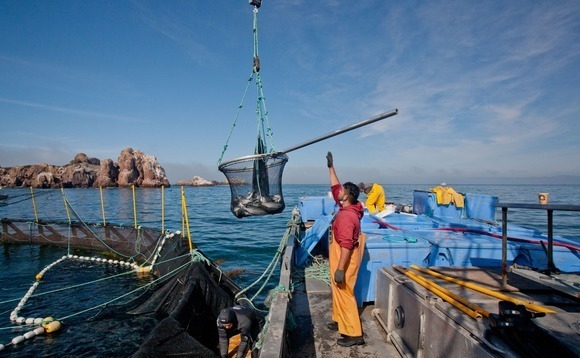
Rising consumer demand for high-quality products and the emergence of technologies that allow greater efficiency are driving investor interest in Asia’s previously overlooked aquaculture industry
With its vast coastal and inland waters, Asia has long been a major source of aquaculture products, from fish to mollusks and to algae. The region accounted for 89% of all fish bred for human consumption in 2016, delivering more than 71 million tons of products and creating over 31 million jobs, according to the UN Food and Agriculture Organization (FAO). China, Taiwan, Vietnam, Indonesia, Bangladesh, and India are among the most active markets.
Despite the depth of the industry, it has received little attention from private investors, even as food quality and safety themes have resonated in other areas. A recent flurry of deal flow suggests that might be about to change – especially with the emergence of a new generation of players hoping to technology to transform what remains a very traditional industry. From aqua-tech specialist Umitron to fish food provider Grobest, more capital is being put to work.
Development is in part driven by macro level developments. Simply put, people in Asia are becoming richer and want to consume more proteins. The region already accounted for two-thirds of global fish product consumption as of 2015, and volumes are only expected to rise.
"When GDP goes up people tend to want to consume more proteins, this has been proven numerous times in a number of other countries. Of the five or six major protein categories – including pork, beef and chicken – fish is the most efficient to produce," says Tai Lin, a managing director at Proterra, which was a captive investment arm of agribusiness giant Cargill before spinning out three years ago.
Finding an angle
Translating big picture themes into actual deal flow is rarely straightforward, however. In the case of aquaculture, the major obstacles are the fragmented nature of the industry and a lack of good information on participants.
"For many investors, it's hard for them to know what they should be looking for," says Amy Novogratz, founder and managing partner at Netherlands-based Aqua Spark, which invests in sustainable aquaculture businesses around the world. "We need to work together to better coordinate our efforts across the industry and start to educate consumers globally."
If there is one angle that investors see as transformative, it is technology. In aquaculture as in many other traditional industries, the internet of things (IoT), big data and artificial intelligence (AI) can be harnessed to great effect. It potentially means more efficient farms and higher-quality products.
In June, for example, Singapore-based Umitron raised S$11.2 million ($8.2 million), in what is said to be the largest ever early-stage investment in Asia's aquatech industry. The company uses IoT and AI technologies to help aquaculture operators optimize fish school analysis and feeding processes as well as reduce environmental risk for water farming resources. Backers include Innovation Network Corporation of Japan and D4V, a seed-stage specialist established by Japan's Genuine Startups and US design consultancy Ideo.
A few months later, Indonesia's eFishery received a $4 million round from the likes of Aqua-spark, Wavemaker Partners, 500 Startups, Maloekoe Ventures, Social Capital, and Unreasonable Capital. Dubbed the first "fishtech" startup in Indonesia, it develops smart feeding systems that allow farmers to schedule feeding times and monitor processes through a smart phone app. The company's feeder devices are used in thousands of farms across 16 provinces and 67 cities.
"Revenue will be significantly higher in 2018 than last year and everything we see indicates that company will achieve its goal of profitability by 2019," says Ashok Reddy, a partner at Unreasonable Capital. "We focus on doing deals in industries where technology enables previously unconnected populations to benefit from access to broader sources of information. EFishery falls under this category."
Feeding time
Of the sub-verticals within aquaculture, aqua feed is seen as having the most potential. Improving the quality of fish's diet can delivery similar productivity gains to the application of technology to food delivery. Meanwhile, from an investor perspective, the labor requirements are lower and the profit margins are higher than in areas such as fish product processing.
Last month, Permira acquired a 50% stake in Ye Cheng Industrial Products, a Taiwan-headquartered aquatic feed producer, at a reported enterprise valuation of around $1 billion. The company, which operates under the Grobest brand, has operations throughout emerging Asia. It manufactures a range of feed products that help combat disease and increase yields, as well as providing technical assistance to farmers across pond maintenance, water treatment, and soil and disease testing.
However, investments in this space have been relatively sparse in Asia, underlining the fact that businesses like Ye Cheng – which offers high-quality products and scale – are in short supply. The most significant previous deal in the space came three years ago when KKR took a significant minority stake in Yuehai Feed Group, a Chinese company that primarily serves shrimp farms, for about $90 million.
The private equity firm has made a string of investments in China intended to capitalize on rising demand for premium food products that meet safety standards. Yuehai, which was already the largest player in China's high-end aquatic feed space when KKR got involved, fits this mold. The company is also well-positioned to benefit from government-directed changes, notably shifting feed input away from raw frozen fish and traditional pellet to more advanced floating puffed feed. The latter is regarded as more efficient due to a higher feed conversion rate.
Lin of Proterra adds that, in some cases, companies will be able to apply their technologies across a broad range of segments. "A lot of businesses in this space will not only produce aquatic food but rather a variety of foods for live stocks in general," he says.
More on Greater China



Latest News

Asian GPs slow implementation of ESG policies - survey
Asia-based private equity firms are assigning more dedicated resources to environment, social, and governance (ESG) programmes, but policy changes have slowed in the past 12 months, in part due to concerns raised internally and by LPs, according to a...

Singapore fintech start-up LXA gets $10m seed round
New Enterprise Associates (NEA) has led a USD 10m seed round for Singapore’s LXA, a financial technology start-up launched by a former Asia senior executive at The Blackstone Group.

India's InCred announces $60m round, claims unicorn status
Indian non-bank lender InCred Financial Services said it has received INR 5bn (USD 60m) at a valuation of at least USD 1bn from unnamed investors including “a global private equity fund.”

Insight leads $50m round for Australia's Roller
Insight Partners has led a USD 50m round for Australia’s Roller, a venue management software provider specializing in family fun parks.