

PE executives in government: Late to the party
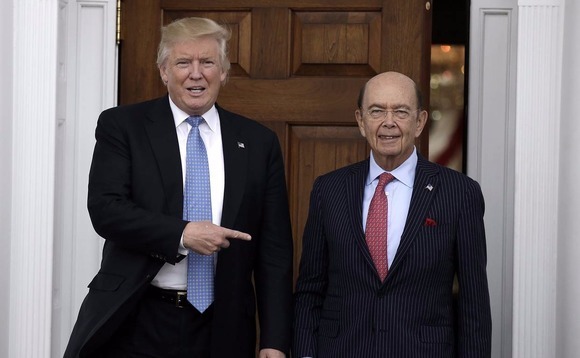
With private equity executives playing an unprecedented role in the Trump administration, the advantages that PE can bring to government – and vice versa – has come into the spotlight
"Our job was just to stick on our mission, because there'd be a lot of noise out there. In all elections in the US there's a lot of hyperbole, and this one certainly had a lot as well."
It was November 2012 and Stephen Pagliuca, then a managing director at Bain Capital, used his opening remarks at the AVCJ Hong Kong Forum to review President Barack Obama's victory over Republican candidate Mitt Romney in the US presidential election. Romney co-founded Bain, and although he had left the firm years earlier, his career in private equity played a major role in his ultimately unsuccessful campaign.
Four years on, Donald Trump's surprise defeat of Hillary Clinton brought PE into the White House after all, as the real estate tycoon tapped the private sector to staff his administration to a greater degree than any president in recent memory. PE executives were considered for leadership roles across the government.
The influx of private equity veterans into government roles has prompted renewed discussion around the benefits that such experience can bring. But the impact of PE is likely to be limited by traditional political gatekeepers, particularly in developed markets.
Well-trod path
Moving from private equity to government is far from unprecedented. President Obama himself turned to the industry to fill roles in his administration – most notably Jack Lew, a managing director at Citi Alternative Investments who served as treasury secretary from 2013-2017. PE veterans also served in lower-profile roles in the Obama administration and on advisory boards, typically covering financial functions.
Such moves are emblematic of a corporate-political relationship that is at times symbiotic. Pat Akey, an assistant professor at the University of Toronto who studies interactions between corporate finance and government, notes that administration experience provides insights that officials can use when they leave government.
"The SEC [Securities & Exchange Commission] writes policies and puts them out for comment, but from the outside it's still difficult to understand the policymaking process," he says. "Being on the inside might give you a better sense of how this is handled." He observes that PE professionals with such experience tend to have an advantage in hiring over those who do not.
In contrast to Obama, less than six months into his administration Trump has chosen PE executives for a range of positions, many with responsibilities ranging far beyond financial matters: for example, WL Ross founder Wilbur Ross as secretary of commerce; Hagerty Peterson co-founder William Hagerty as ambassador to Japan; and Stephen Schwarzman, chairman and CEO of The Blackstone Group, as chairman of the President's Strategic & Policy Forum. Cerberus Capital Management co-founder Stephen Feinberg is reportedly under consideration to head a review of the US intelligence community.
While recruiting private equity veterans for such roles is a departure from the practice of previous administrations, industry professionals feel the approach has a lot to recommend it. A PE executive's experience improving and streamlining businesses can come in handy for an administration looking to reorganize.
"Private equity is an industry where fund managers need to develop very early on the capacity to adapt themselves to operating within different markets and sectors very quickly," says Yasser El-Ansary, chief executive of the Australian Private Equity & Venture Capital Association (AVCAL). "That adaptability is really central to the skillset of private equity managers."
It should be noted that this was essentially the argument used by the Romney campaign in 2012. The candidate held up the firm's experience building up companies like office-supply retailer Staples as proof that he could successfully reorganize the US government the same way.
But his opponents, both in the Republican primary and later in the general election, turned that argument against him by highlighting instances where Bain portfolio companies had gone bankrupt or survived by cutting jobs. The attack was effective at turning voters against Romney, though it arguably mischaracterized the firm and its operations.
Unkind ballot box
Romney's example highlights one possible reason private equity veterans are seen more often in appointed positions than elected ones. Running for office opens up every aspect of one's record for opponents to examine, and even if their attacks are inaccurate they can create a lasting impression. A nomination process will typically not bring nearly as much scrutiny.
It is not impossible for PE executives to win electoral success: Sandiaga Uno, a founding partner of Indonesia-focused GP Saratoga Capital, became deputy governor of Jakarta earlier this year. He was the latest prominent member of Indonesia's private equity community to enter public service, following Ancora Capital co-founder Gita Wirjawan and former Quvat Capital CEO Tom Lembong, a former and current trade minister respectively.
"Government would like to attract the best talents, and they see it in private equity," says Uno. "Two presidents already spotted the best of private equity … and I was recruited by the opposition earlier when we made the transition at Saratoga."
However, Uno is the only one of the three to win an election, which appears to confirm that whatever role private equity plays in government, it is unlikely to come through the political process. Even Uno's victory required several years of groundwork; he began to scale back his corporate roles in 2015. And party frameworks in developed nations tend to favor those who are well-connected, with their own networks that put outsiders at a disadvantage.
"Running for office is a full-time job. You need to be in a position like Mitt Romney, where you have financial means to be able to stop working, or can rely on equity that you've already invested that pays certain dividends, to be able to run for office full time," says Akey. "You start campaigning for elections a year-and-a-half out – it's not everyone in private equity who can do that."
More on North America




Latest News

Asian GPs slow implementation of ESG policies - survey
Asia-based private equity firms are assigning more dedicated resources to environment, social, and governance (ESG) programmes, but policy changes have slowed in the past 12 months, in part due to concerns raised internally and by LPs, according to a...

Singapore fintech start-up LXA gets $10m seed round
New Enterprise Associates (NEA) has led a USD 10m seed round for Singapore’s LXA, a financial technology start-up launched by a former Asia senior executive at The Blackstone Group.

India's InCred announces $60m round, claims unicorn status
Indian non-bank lender InCred Financial Services said it has received INR 5bn (USD 60m) at a valuation of at least USD 1bn from unnamed investors including “a global private equity fund.”

Insight leads $50m round for Australia's Roller
Insight Partners has led a USD 50m round for Australia’s Roller, a venue management software provider specializing in family fun parks.