
Interview
Asian Venture Capital Journal | 14 Feb 2011 | 10:37
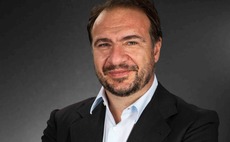
The CEO of global LP Adams Street Partners T. Bondurant French sits down with AVCJ to discuss allocation strategies, the PE industry’s challenges and how his wariness of global mega funds paid off post-crisis.
Q: What is your global allocation strategy, and where does Asia fit in?
A: The way Adams Street thinks about the world is not like buckets in a sense of Asia vs. Europe vs. the US. We have one global bar, we have a global team. We have offices in London and Singapore, we're opening an office now in Beijing, and we have offices in Menlo Park and Chicago. We have a global venture team and a global buyout team, so we cross staff and investments, across the offices, across the oceans.
Our strategy is more bottoms-up in terms of where the managers we want to invest with are located. So it turns out today that roughly 50-60% of our money is invested in the US and, obviously, the reverse of that is invested outside the US. Of that, 40-50% non-US allocation, roughly two-thirds allocated to Europe and one-third in Asia.
Q: And how do you approach investment in emerging markets, particularly in the context of Asia?
A: By our definition worldwide, ‘emerging' now includes Russia, Brazil, India, China and markets like this. South Africa is an example of where we've made a recent investment. Emerging markets take roughly 10% of our total, and a large share of that is in China. About half of that is in China.
Q: You brought up your focus on venture and buyout deals. Where are these opportunities in Asia?
A: You have to go country by country. We have managers in nine countries from across Australia on up through Asia; we have about 20 managers, and they're all employing different strategies. In a market like Australia, there are more buyout managers than growth equity. There are more growth equity managers in both India and China, but fewer control buyouts. There are also venture capital mangers in both India and China. We don't have any venture managers in Japan and Australia, for example, so it's based on the country and what makes sense according to the managers' own strategies.
Q: You took a contrarian view to megafunds initially? Can you talk about that?
A: In the '06, '07 and '08 time period, mega funds - not so much in Asia but in the US and Europe - were becoming increasingly popular, becoming very large and raising enormous amounts of money, something like 10, 15 or 20 billion dollars in a single fund. We underweighted that, and while we weren't absent in that marketplace - we weren't necessarily negative on it - it just seemed overdone to us, so it was underweighted. Now, all of a sudden, it's reversed. Mega funds are out of favor.
But a year or so ago during the crisis, a lot of LPs needed liquidity and they were selling at enormous discounts their more recent investments in mega funds. We made a huge number of purchases there of buyout funds in a space that we had previously underweighted - just at a later time when there wasn't totally a blind pool - and at big discounts. So it just depends on the opportunity and the price and what makes sense.
Q: What do you think is the industry's biggest gripe?
A: There are a lot of investors who haven't earned the kind of return they've been looking for over time, and so it's important that the general partners are able to deliver - and that their companies are able to deliver - both returns and liquidity. I do think that's happening, but fundamentally it's an issue of poor returns.
In past the decade, the S&P 500 has generated nearly zero return for 10 years. Our returns are roughly 700 or 800 basis points higher than that, so if we see a 7 or 8% return ... it's not an absolute number that we're happy with, but relative to what's happening in public equities, it's a huge spread. However, given private equity's ill liquidity and the risks needed to generate returns, the industry hope to see at least 12 to 15% returns.
Q: Has the financial crisis altered the way you communicate with funds, or they way they communicate with you?
A: In terms of the due diligence and the transparency, we are spending more time meeting with our clients and communicating with them. Because the world is changing more rapidly with every quarter, you know things can be different, and so the general partners are spending more time meeting with us.
To see more of French's thoughts, check out AVCJ TV.
Comments
Updating your subscription status
Events
AVCJ Europe will bring the region's most successful and powerful fund managers to London. Attendees will hear thought-provoking dialogue about investment opportunities and challenges across Asia, and will learn how leading funds have achieved success in the world's most resilient growth engine. Register now, for the opportunity to network with Asian-based firms and some of Europe's largest institutional investors who are looking to expand their portfolios and contacts in Asia.
Date: 13 June 2013
Venue: Commonwealth Club, London
The 14th Annual AVCJ Japan Private Equity & Venture Forum, taking place on 27-28 June 2013 at the Conrad Hotel in Tokyo, will feature can't miss analysis of Japan's private equity industry including an in-depth look at how the sector can benefit from the rapidly improving economy. After years of low-growth, has a new era finally dawned? Register now to hear from more than 45 of the most experienced and well-respected players in Japan, as well as some of the biggest domestic and international institutional investors.
Date: 27-28 June 2013
Venue: Conrad, Tokyo
Website | Register | Request a brochure
Advertisement
News Alerts
Digital Edition
Advertisement
There are no comments submitted yet. Do you have an interesting opinion? Then be the first to post a comment.